How to Fix E Bike Torque Sensor Calibration Issues After Replacing Pedals?
You replace your pedals, head out for a ride, and the bike suddenly feels wrong. The assist comes in too hard, too late, or not at all.
That can feel confusing, especially when the pedal swap seemed simple. The good news is that pedal changes can affect torque sensor behavior in a few clear ways, and many of them are easy to check at home.
This guide explains what usually goes wrong after a pedal replacement and how to fix it with calm, practical steps.
In a Nutshell
- A pedal change can affect more than the pedal itself. New pedals can change stance width, pedal body shape, magnet placement, pedal washer use, and even how your foot loads the crank. A torque sensor reads rider force, so a small change near the crank can make the bike feel very different.
- Start with the fastest fix first. Turn the bike fully off, keep all weight off the pedals, then restart it. Many systems set a zero point at startup. If you power on while a pedal is loaded, the bike may read that force as normal and give strange assist after that.
- Check the simple mechanical details before chasing software. Make sure the right pedal is on the right side and the left pedal is on the left side. Tighten both to the maker spec. Look for pedal washers, unusual axle length, and any pedal body that sits too close to the crank or chainstay. Simple checks solve a lot of cases.
- Look closely at the crank area. Some systems are sensitive to crank arm position, index marks, magnets near the drive unit, and cable connections around the sensor. A wrongly fitted crank or a magnet near the pedal can confuse the system, even if the new pedals look fine.
- Use method, not guesswork. Test the bike in one assist mode at a time. Ride flat ground first. Compare left foot pressure and right foot pressure. Watch for delay, surge, or weak support. This helps you tell the difference between a bad reset, a fit issue, and a real sensor problem.
- Know when to stop and get help. If the bike shows an error, loses assist again and again, or only works through walk mode or throttle, the issue may be deeper than calibration. In some bikes, the torque sensor sits inside the bottom bracket or drive unit. That means a shop may need to run a service tool and check live sensor values.
Why a pedal replacement can affect torque sensor behavior
A torque sensor does one main job. It reads how much force you put into the pedals and tells the motor how much help to give. When you replace pedals, you change the part your foot pushes on, and that can change the feel of the force that reaches the crank.
New pedals may have a different axle length, body height, or grip shape. Some riders also add washers during installation. That can slightly change foot position and pressure. On a sensitive e bike, that small change can feel much bigger once the motor joins in.
There is also a second issue. Some bikes set a zero point when they start up. If the pedal is loaded during startup, the torque sensor may begin from the wrong baseline. Pros of checking this first are clear: it is fast, free, and safe. Cons are also clear: it only helps if the problem is calibration, not damage.
Notice the symptoms before you start fixing anything
Before you touch another bolt, ride the bike for a short test if it is safe to do so. Pay attention to what the assist feels like. Does the bike surge with light pressure? Does it wait too long before the motor wakes up? Does one side feel normal while the other side feels weak?
These details matter because they point to different causes. A jumpy start often suggests a bad zero point or a strange signal. A dead feel can point to a loose connection, crank issue, or a sensor that is no longer reading force correctly.
Try to describe the problem in plain terms. Write down when it happens, which assist mode you used, and whether walk mode or throttle still works. The main benefit of this method is accuracy. The downside is that it takes patience. Still, good notes can save a lot of time later, especially if you end up needing shop help.
Start with a zero load power reset
This is the first real fix to try, and it often works. Turn the bike off fully. Wait a few seconds. Make sure the bike is standing still. Keep both feet off the pedals. Then power the bike back on and let it finish startup before you touch the cranks.
Many torque sensing systems use startup to establish a no force baseline. If you rested a foot on a pedal during the first startup after the pedal swap, the bike may have learned the wrong zero point. A clean restart can clear that bad baseline. It is the easiest useful test you can do.
Pros are excellent. It is quick, costs nothing, and creates no new risk. Cons are simple too. It will not fix a loose pedal, a wrong crank fit, or a damaged sensor. If the bike feels normal after this, do two short rides before you trust the result. That confirms the reset truly worked.
Make sure each pedal is on the correct side and fully seated
This sounds basic, but it matters. The right pedal uses a standard thread. The left pedal uses a reverse thread. If a pedal starts crooked or goes on the wrong side, it may seem tight for a moment but still sit badly in the crank. That can affect pedal feel, crank alignment, and long term thread health.
Remove each pedal and reinstall it carefully. Start the thread by hand. Do not force it. Tighten it to the pedal maker spec. If the old pedal used a washer and the new one did not, or the other way around, check whether that change was intentional.
A fully seated pedal gives a clean transfer of force. A badly seated pedal can create movement, noise, and strange feedback.
The benefit of this step is that it fixes both safety and sensor feel issues. The downside is that it does not help if the sensor problem started somewhere else. Still, every good diagnosis starts here.
Check pedal washers, axle length, and clearance around the crank
A new pedal can sit farther out or farther in than the old one. That changes stance width and foot angle. On some bikes, it also changes how close the pedal body or axle sits to the crank, chainstay, or drive unit. If you added pedal washers, look at both sides and confirm they match unless your bike needs an intentional side difference.
This matters because uneven pedal setup can change how force enters the crank. It can also create light contact that feels like a sensor problem when it is really a mechanical issue.
Even a slight rub can make assist feel rough or delayed. If the bike only feels wrong under harder pedaling, clearance becomes even more important.
Pros of this method are strong because it solves hidden fit issues. Cons are that the change can be subtle and easy to miss. Spin each crank slowly by hand and look from the rear and side. You want clear, even movement and no contact.
Verify crank arm position and index marks
Sometimes the pedal replacement is not the real cause. The crank may have shifted, or someone may have loosened more parts than expected during the job.
This is especially important on bikes where the drive system is sensitive to crank orientation. Some systems can throw warnings if the crank goes on in the wrong direction or wrong position.
Look at both crank arms and compare their alignment. They should sit exactly opposite each other. If your crank has index marks, arrows, or fit guides, check them.
Some drive units depend on correct crank orientation for proper assist behavior. If the crank sits wrong, the sensor can read force at the wrong time or refuse to work well.
The good side of this check is that it can explain strange problems that survive a reset. The bad side is that some bikes need special tools for full crank removal and refit. If you are unsure, do not force it. A small mistake here can lead to a bigger one.
Inspect for magnets or metal items near the drive area
This one surprises many riders. Some e bike systems are sensitive to magnets near the drive unit or pedal area. If your new pedal uses a magnetic accessory, a cleat related magnet, or a pedal mounted item, it may interfere with sensor operation. Some systems have official fault guidance that points to a magnet on or near the pedal as the cause.
Check both pedals for added accessories. Look for anything magnetic near the crank or motor area. Also remove stray metal debris if you see any around a sensor ring or pickup point.
A magnet in the wrong place can confuse the sensor and stop normal motor support. This issue is rare, but when it happens, the fix is very simple.
Pros are obvious. The check is quick and costs nothing. Cons are that many riders never think to look for it, so the issue can drag on longer than it should. If the problem began right after a new pedal with special features, pay extra attention here.
Look at sensor cables, harness plugs, and the area around the bottom bracket
If the pedal swap involved moving the bike, turning it upside down, or working near the crank with tools, check the cable area around the bottom bracket or drive unit.
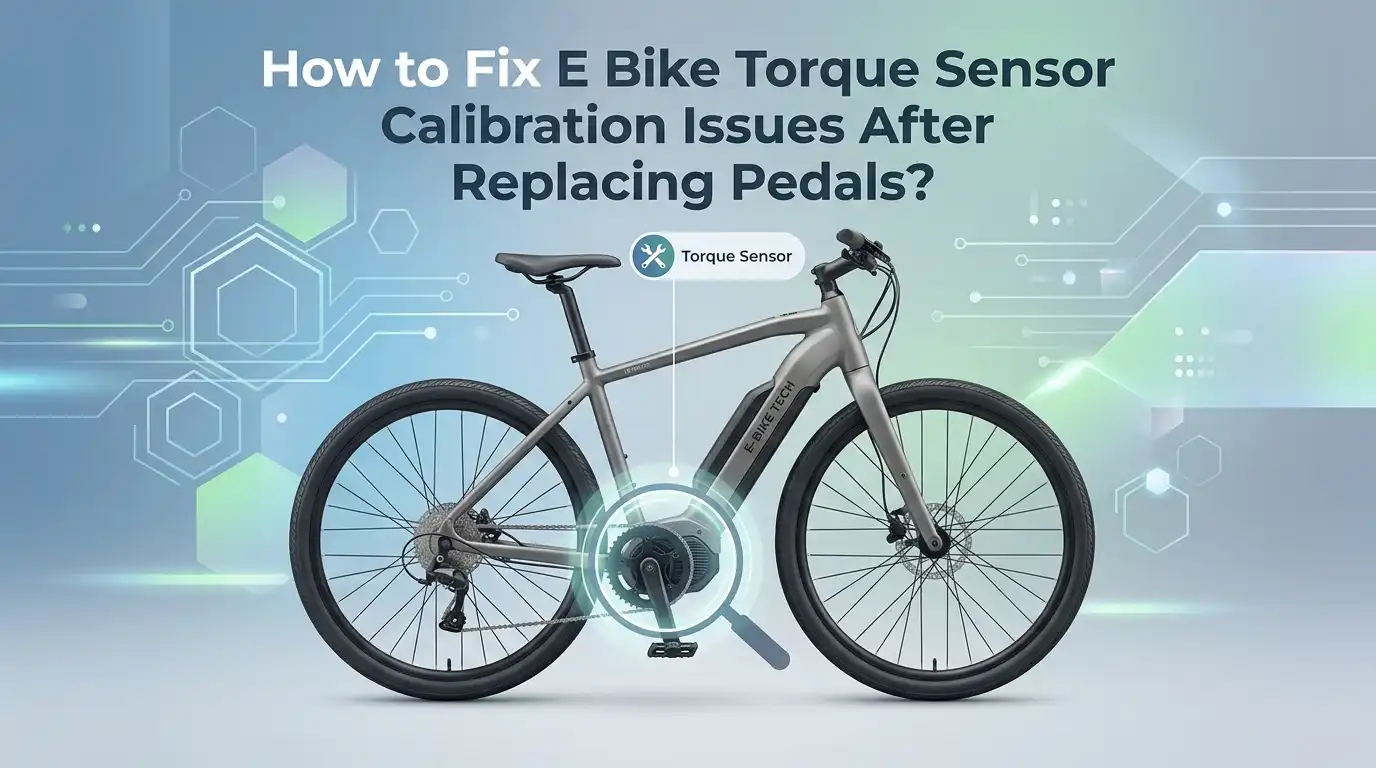
On some bikes, the torque sensor sits in or near the bottom bracket assembly. The wires and plugs in that area can be small and easy to disturb.
Look for a loose plug, bent pin, dirt, or moisture. Do not yank any wire. Just confirm that everything is seated and clean. If your bike maker shows a torque sensor connector in the service guide, inspect that point first. A loose connection can feel just like bad calibration. The motor may read weak force, random force, or no force at all.
The benefit of this method is that it can solve a hidden electrical issue without parts. The downside is that some systems hide the connector inside covers or inside the drive area. If access is tight, stop before you damage a seal.
Use a walk mode reboot if your brand supports it
Some brands include a reset routine that uses walk mode. This can help when pedal assist stops working even though the bike still powers on and other functions seem normal.
On at least one support flow, the bike is set to a low assist mode, switched into walk mode, allowed to move under its own assist briefly, and then returned to normal riding modes for retest.
This does not mean every e bike works the same way, so check your brand instructions first. Still, the idea is useful. It gives the system a controlled assist event and can help the bike reinitialize its torque reading. For some riders, this works when a normal restart does not. It is a smart second reset option.
Pros are that it is simple and can revive a bike with no obvious damage. Cons are that it is brand specific and may do nothing on systems that do not use this logic.
Test each assist mode on flat ground before changing more parts
After every fix attempt, do the same short test ride. Choose flat ground. Start in the lowest assist mode. Pedal smoothly for thirty to sixty seconds. Then move to the next mode. Do not change too many things at once. You want a clean before and after comparison.
Feel for three things. First, how fast the motor responds. Second, how smoothly it builds power. Third, whether the power level matches your leg effort. A healthy torque sensor feels proportional. A bad one feels late, jumpy, weak, or strangely uneven.
The good side of this method is that it keeps you from guessing. The bad side is that it can feel slow if you are in a hurry.
Still, this test separates a true sensor problem from a rider fit issue or a single bad restart. It also helps you notice whether only one assist level is acting strange, which can point to settings rather than hardware.
Recalibrate through the display, app, or service tool if your bike allows it
Some bikes let the rider change assist feel in the display or app. Others require a dealer service tool for true torque sensor setup. If your brand offers a reset, calibration, or torque related setup screen, use the exact maker procedure. Do not guess. Follow the order shown in the manual.
In shop level service, a technician may check live sensor values and compare the no load signal against the expected range.
Some bottom bracket style guides even show typical rest and loaded voltage values for testing. That kind of check can confirm whether the sensor is healthy or drifting. It is useful when home fixes fail.
Pros of a proper calibration are precision and confidence. Cons are limited access. Many brands hide this function from home users. If you can adjust only general assist strength, remember that this changes ride feel but may not fix a true bad zero point.
Know when the issue is mechanical instead of calibration
Sometimes the system is calibrated well enough, but something physical is still wrong. A worn bottom bracket, loose crank interface, damaged pedal thread, or bent axle can all distort the force path into the sensor. The bike may feel rough even after resets because the problem is not software at all.
Listen for clicks under load. Feel for side play in the crank. Spin the cranks by hand and check for roughness. If the bike only acts up during strong pedaling, a mechanical cause becomes more likely. Calibration fixes signal problems, but it cannot cure worn hardware. If a part moves when it should stay fixed, the sensor will never feel fully right.
The benefit of this mindset is that it stops endless reset attempts. The downside is that a mechanical diagnosis may require tools or a shop stand. Still, it is the correct next step when resets keep failing.
Compare the new pedals with the old ones if you still have them
If you kept the old pedals, use them as a diagnostic tool. Reinstall the old pair and repeat your test ride. If the problem disappears, the new pedals likely changed something important. That could be axle length, body shape, washer need, magnet placement, or even how your shoe contacts the platform or clipless system.
If the problem stays with the old pedals too, the swap may have exposed a deeper issue that was already waiting to show up. This back to back test gives strong evidence. It turns a vague feeling into a real comparison.
Pros are excellent because you get a direct answer without special equipment. Cons are minor. You need time, tools, and the old pedals in usable shape. Still, few home tests are more useful than returning the bike to its last known good setup and seeing what changes.
Know when to stop riding and book a shop visit
If the bike shows a fault code, loses assist again after every reset, or feels unsafe under load, stop testing on the road. A shop can do what home checks cannot.
They can inspect the crank interface, read service data, test the sensor signal, and confirm whether the problem sits in the sensor, controller, harness, or crank setup.
Bring clear notes. Tell them when the issue started, what pedals you installed, whether you used washers, and which fixes you already tried. Mention if throttle or walk mode still works. Good details help the mechanic move faster and avoid random part swapping. That saves both time and money.
The advantage of professional service is accuracy. The downside is cost and wait time. Even so, once the bike becomes unpredictable, expert testing is the smart move.
Prevent the same problem next time you change pedals
The best fix is the one you never need. Before your next pedal swap, power the bike off completely. Change the pedals with the bike stable and upright. Reinstall carefully by hand first. Match washer use side to side unless your setup calls for something different. Then restart the bike with zero weight on the pedals.
After startup, do a short low speed test before a full ride. If your system has crank marks or a service note about alignment, check them before you leave the garage. A calm install routine prevents most post swap sensor headaches. Five extra minutes now can save a long troubleshooting session later.
Pros of prevention are obvious. It is easy and nearly free. The only real con is that it asks for patience. On a modern e bike, patience is often the cheapest repair tool you have.
FAQs
Can new pedals really throw off an e bike torque sensor?
Yes, they can. The sensor reads force through the crank system, so a new pedal can change stance width, foot angle, axle length, or clearance. A pedal change can also lead to a bad startup zero point if you put weight on a pedal while turning the bike on. The pedal itself may be fine, but the system around it may react differently.
Should I reset the bike every time I replace pedals?
You do not need a full service reset every time, but a clean power cycle is a smart habit. Turn the bike on only after the pedals are fully installed and unloaded. That helps the sensor start from a true no force baseline. It is quick, safe, and worth doing after any work near the crank area.
Do pedal washers cause torque sensor issues?
Pedal washers do not automatically cause problems, but they can change pedal position and stance width. If you add one washer on one side and none on the other, the bike may feel uneven. Washers can also change crank clearance. Use them only when needed and keep the setup intentional. Then test both sides for equal feel and smooth rotation.
What if throttle works but pedal assist does not?
That often points to a pedal sensing issue rather than a full power problem. The bike has power, but the system is not reading pedal force correctly. Start with a zero load restart, then inspect pedal fit, crank position, wiring, and any brand specific reboot routine such as walk mode reset. If the issue stays, the torque sensor or its connection may need professional testing.
When should I stop riding and take the bike to a shop?
Stop riding if the bike surges without warning, cuts out under load, shows a fault code, or feels unsafe in traffic. Also stop if the cranks have side play, the pedal threads feel damaged, or resets only help for a few minutes. A shop can check live sensor data and inspect the drive system in ways that home troubleshooting cannot.

Hi, I’m Archie Flynn, the founder and writer behind RapidResizerHub! 👋 I’m a passionate tech enthusiast who loves exploring the latest gadgets, smart devices, and trending electronics on Amazon. Through my honest, hands-on reviews and detailed buying guides, I help readers make smarter, well-informed shopping decisions.