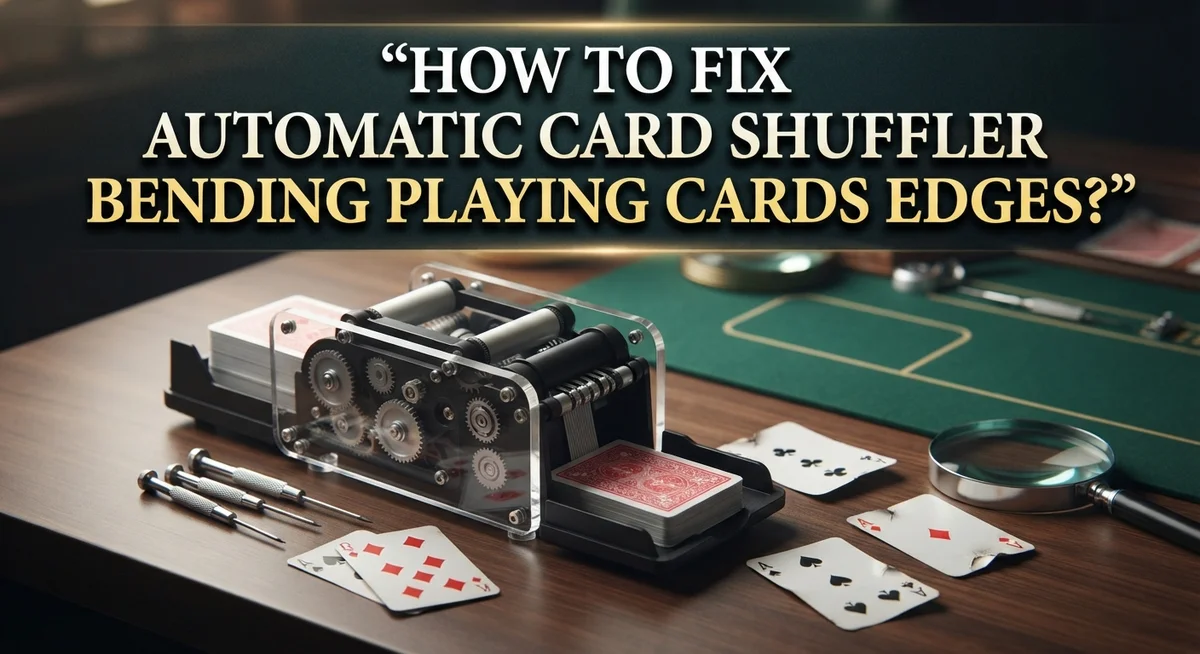
How To Fix Automatic Card Shuffler Bending Playing Cards Edges?
Do your playing cards come out of the shuffler with bent edges or weird chisel marks? You are not alone. This is a common problem with many automatic card shufflers.
The good news is that you can fix this issue. You can also stop it from happening again.
Automatic shufflers are convenient. But they sometimes apply too much pressure on card edges. This causes bending, creasing, and permanent damage over time.
In a Nutshell
- Cheap electric shufflers often cause the most damage. Low quality gears grip cards too hard and leave marks on the edges.
- Hand crank shufflers are a safer choice. You control the speed and pressure yourself, so cards do not jam as easily.
- Switch your shuffle style to avoid stress on the deck. Try an overhand shuffle or a wash shuffle instead of a riffle.
- Act fast if a card jams. Remove the whole deck right away. Never force a bent card through the rollers.
- Flatten bent cards after you free them. Place them under a heavy weight for a day or two to fix the curve.
- Not every shuffler is bad news. Quality really does vary by model, so pay attention to how your machine handles the cards.
Why Automatic Card Shufflers Bend and Damage Card Edges
Automatic card shufflers bend and damage card edges for specific mechanical reasons. Understanding these causes helps you prevent problems before they start.
The main culprit is pressure applied inconsistently throughout the shuffling cycle. Electric shufflers use rollers or wheels to move cards through the machine. When cards enter the shuffler, these rollers grip the deck with force. If the machine applies uneven pressure, certain areas of the card edges get compressed more than others. This creates visible bends and creases along the sides.
Jamming is another major cause of edge damage. Cards sometimes catch or stick inside the shuffler instead of moving smoothly through. When this happens, the rollers continue applying pressure to the stuck card. The card gets pinched and bent as the machine tries to force it through. This often leaves chisel marks or permanent creases on the edges.
Low quality electric shufflers have loose tolerances in their design. This means the rollers don’t maintain consistent spacing. Cards slip or shift during the shuffle, causing uneven contact with the mechanical parts. The deck gets twisted or squeezed in ways that bend the edges.
Hand crank shufflers avoid many of these problems because you control the speed and pressure manually. You feel resistance and can adjust your movements. This operator control prevents the sudden jamming and uneven pressure that damages cards.
Card quality matters too. Cheaper playing cards have softer materials that bend more easily. Premium cards with stiffer stock resist damage better, though they still need proper shuffler handling.
The shuffling method itself affects edge stress. Riffle shuffles inside automatic machines create more bending than other techniques.
Identifying the Warning Signs of Shuffler-Related Card Damage
Your playing cards show clear warning signs when shuffler damage occurs. Watch for bent edges that look like they got pinched or crushed. These bends often appear on the corners first, especially the top and bottom edges of your deck.
Look for chisel marks running along the card edges. These marks look like small grooves or indentations that the shuffler rollers created. They usually appear in straight lines across multiple cards at once.
Check if cards come out with wavy or rippled edges instead of flat, crisp lines. This rippling means the shuffler applied uneven pressure during the shuffle cycle. The cards got compressed from different angles at the same time.
Pay attention to cards that stick or jam inside the shuffler. When a card catches, stop immediately. This is your first warning sign that damage is happening right now.
Notice if only certain cards in your deck show damage while others look fine. This pattern tells you the shuffler has loose tolerances in its design. Some cards fit through the rollers tightly while others slip through without pressure.
Feel the edges of your cards with your fingers. Run your thumb along the sides. Rough spots or bumps that weren’t there before mean the shuffler is wearing them down.
Watch the shuffler output tray too. If cards tumble out at odd angles or land bent, the machine is forcing them through at wrong speeds. Cards should exit smoothly and land flat.
These warning signs appear early, often after just a few shuffles. Catching them fast helps you stop damage before it spreads to your entire deck.
Step-by-Step: What To Do When a Card Jams or Catches
A card jam happens fast. You’ll hear the shuffler stop or make a grinding noise. The machine might get stuck or slow down suddenly. This is your signal to act immediately.
Stop the shuffler right away. Do not force it to keep running. Forcing the machine only adds more pressure to the trapped card. This pressure causes deeper bends and creases that you cannot fix later.
Remove the entire deck from the shuffler. Do not try to pull out just the jammed card. Pull the whole deck out as one unit. This reduces tension on the stuck card and prevents it from tearing.
Free the jammed card gently. Once the deck is out, locate the card that caught. Work it out slowly without twisting or bending it further. Move it in the same direction the shuffler was pushing it. Avoid pulling it backward against the rollers.
Inspect the damaged card. Check the edges for bends, creases, or marks. Look at both sides. Some damage appears immediately. Other damage shows up only when you look closely.
Flatten the card under weight. Place the bent card between two flat, heavy objects. Stack books, weights, or other items on top. Leave it there for several hours or overnight. This helps restore the card to its original flat shape.
Let the shuffler cool down. After a jam, stop using the machine for at least 30 minutes. This prevents overheating and gives the mechanism time to reset.
Check your shuffler settings. Some machines have pressure or speed controls. Lower these settings before shuffling again. Gentler operation means fewer jams in the future.
How To Flatten and Restore Bent Playing Cards
Bent playing cards need proper care to return to usable condition. The flattening process works best when you act quickly after damage occurs.
Start by removing the damaged card from your deck immediately. Do not leave bent cards mixed with your good cards, as they can damage others during future shuffles. Inspect the bent edges carefully to understand the damage pattern.
Place your bent card between two flat, heavy objects. Books work well for this purpose. Make sure the card lies completely flat between them. The weight should press down evenly across the entire card surface. Leave the card in this position for at least 24 hours.
Check the card after one day has passed. If the bend remains visible, leave it under weight for another 24 hours. Some bends take longer to flatten than others. Patience matters more than rushing the process.
For cards with multiple bends or severe creasing, you may need to extend the flattening time to 48 or 72 hours. Extreme pressure from shuffler jams sometimes creates permanent damage that resists flattening.
Once your card appears flat, remove it carefully and flex it gently. A properly restored card should feel smooth and bend naturally without cracking.
Test the restored card by shuffling it by hand a few times. Listen for any cracking sounds. If the card feels brittle or shows cracks, it may not survive future use.
Store your restored cards in a protective case. Keep them away from moisture and heat, which can cause new bending. Consider replacing severely damaged cards rather than continuing to use them. Your deck performs better with cards in good condition.
Shuffling Techniques That Prevent Edge Damage
Automatic shufflers damage cards because they apply constant pressure to card edges. The solution is simple: use shuffling techniques that work with your hands instead of machines.
The overhand shuffle keeps your cards safe. Hold the deck in one hand and pull small groups of cards into your other hand. Let each group fall naturally and interweave with the previous cards. This method requires no machines and puts zero stress on card edges. Square your deck carefully after each shuffle to keep edges crisp and straight.
The wash shuffle ranks as one of the safest options available. Spread your cards face down on a flat surface. Mix them around with your hands in circular motions. This technique randomizes your deck while applying almost no pressure to edges. It takes longer than automatic shufflers, but your cards stay undamaged.
Hand-crank shufflers offer a middle ground if you want mechanical help. These devices let you control the speed and pressure yourself. You push the handle at your own pace, which prevents jamming and edge bending. Electric shufflers run at fixed speeds that often pinch card corners.
Avoid riffle shuffles with any automatic machine. The riffle motion combined with roller pressure creates the chisel marks you see on damaged cards.
Your deck stays in better condition when you shuffle by hand. Yes, it takes more time. Your cards last longer and maintain their value. This simple trade-off protects your investment in quality playing cards. Start using hand techniques today and notice the difference after just one week of shuffling.
Common Mistakes That Lead to Bent or Chiseled Edges
Automatic card shufflers bend and chisel edges because of how they operate. Most electric models force cards through metal rollers under constant pressure. This pressure creates stress points along the card edges, especially when cards jam or get stuck.
Low quality electric shufflers cause the most damage. Budget models have poorly designed rollers that don’t grip cards evenly. Some rollers apply uneven pressure across the deck width. This uneven force creates visible chisel marks on card edges.
Allowing cards to jam inside the shuffler is a major mistake. When a card catches between rollers, the machine keeps applying pressure. This pressure bends the card against the metal parts. Forcing a bent card back through the shuffler makes the damage worse.
Overusing the same shuffler repeatedly damages your cards faster. Electric shufflers wear down over time. Worn rollers develop flat spots and rough edges. These worn surfaces scratch and bend cards more easily than new rollers.
Riffle shuffles with automatic machines create extra edge stress. The riffle motion combined with roller pressure creates the chisel effect on card corners. This combination is particularly hard on card edges.
Hand-crank shufflers prevent most edge damage because you control the speed and pressure. You can stop immediately if a card catches. You feel resistance and can adjust your movement before damage happens.
Using bent cards repeatedly in a shuffler causes more bending. Each pass through the machine stresses the already damaged edges further. Remove bent cards from your deck before shuffling again.
Improper deck positioning before shuffling also matters. Cards that sit crooked in the input tray experience uneven pressure. Always square your deck carefully before inserting it into any shuffler.
Hand-Crank vs Electric Shufflers: Control and Card Safety
Hand-crank shufflers give you direct control over how fast cards move through the machine. You decide the pressure and speed, which means you can stop immediately if a card starts to bend or jam. Electric shufflers run at fixed speeds and apply constant pressure regardless of what happens inside.
This control difference matters because card edge damage happens when rollers apply too much force. With a hand-crank model, you feel resistance and can adjust before problems start. Electric machines don’t give you this feedback, so cards keep getting pushed through even when they’re catching or bending.
Hand-crank shufflers work best for protecting your deck. You can slow down, check card alignment, and ensure every card feeds smoothly. If something feels wrong, you stop turning the handle immediately.
Electric shufflers offer speed and convenience, but they sacrifice safety. The machine doesn’t know when a card is damaged or misaligned. It keeps operating at the same pressure until the card either breaks free or gets permanently bent.
Quality varies significantly between models. Budget electric shufflers have poorly designed rollers that don’t grip cards evenly, creating uneven pressure that bends edges. Better electric models have improved roller design, but they still apply constant force.
For maximum card protection, hand-crank shufflers win this comparison. You maintain complete control over every shuffle cycle. If you prefer electric machines, choose higher quality models and monitor each shuffle carefully. Stop the machine immediately if you notice any resistance or unusual sounds inside.
Maintaining Your Shuffler for Long-Term Card Protection
Your shuffler needs regular care to protect your cards from damage. Clean the rollers every few weeks by gently wiping them with a soft, dry cloth. Dust and debris build up inside machines and cause cards to catch on rough spots.
Check your shuffler’s rollers for wear patterns. If you see grooves or flat spots forming, the machine is aging and will damage cards more easily. Worn rollers grip cards unevenly and create pressure points that bend edges.
Inspect the card feed mechanism regularly. Make sure nothing blocks the entrance or exit. A blocked feed forces cards to jam, which bends them severely. Clear any stuck fibers or bent card pieces immediately.
Store your shuffler in a dry place away from humidity. Moisture makes wooden components swell and metal parts rust. Both problems cause rollers to misalign and pinch cards.
Test your shuffler monthly with a single card before running a full deck through. Feed it slowly and listen for grinding sounds. Grinding means the machine needs cleaning or repair.
Replace worn machines promptly. A shuffler that’s several years old will damage cards faster than a newer model. The cost of replacing cards exceeds the cost of a new shuffler.
Keep your deck separate from the shuffler when not in use. Don’t leave cards inside the machine overnight. Pressure from sitting in rollers creates permanent bends.
Maintain consistent shuffler operation. Use it at the same speed each time. Varying speeds causes rollers to apply uneven pressure, which damages card edges inconsistently.
Final Thoughts
Bent card edges don’t have to ruin your deck. You now know why automatic shufflers cause this damage.
Rollers apply pressure that chisels edges over time. Cheap electric models make this problem worse. Jammed cards create the most severe bending issues.
The fix starts with prevention. Switch to overhand or wash shuffles when you want to protect your cards. These methods interweave cards gently without forcing them through tight rollers.
Hand-crank shufflers give you another safe option. You control the speed yourself. This control stops rollers from crushing card edges the way electric machines sometimes do.
If your cards already show damage, act fast. Remove the deck immediately if a card catches inside the machine. Never force a stuck card through the rollers.
Flattening bent cards under heavy weight can restore them somewhat. Leave them there for several days. This won’t fix severe chisel marks, but it helps minor bending.
Regular maintenance also matters here. Clean rollers and proper storage prevent many edge problems before they start. A shuffler in good condition treats your cards better.
Remember that not every shuffler causes damage. Quality varies a lot between models. Some machines protect cards well, while others chew through decks fast.
Your best strategy combines careful shuffle methods with proper equipment care. Choose hand shuffles or hand-crank machines when card condition matters most.
Stay alert for jamming or unusual resistance during shuffling. Catching problems early saves your deck from lasting damage. Simple habits protect your cards for many games ahead.
Frequently Asked Questions
Why does my automatic card shuffler bend card edges?
Electric shufflers apply consistent pressure through rollers. This pressure can chisel and bend card edges over time, especially if cards jam or feed unevenly. Low-quality models tend to cause more damage because their rollers lack precision. The force happens automatically without your control, so damage accumulates faster than with manual shuffling methods.
Can I fix cards that are already bent?
Yes, you can restore some bent cards. Place damaged cards under heavy weight for several hours or overnight. A stack of books or a weighted board works well. The pressure helps flatten the edges back to normal. This method works best on cards with minor bending. Severely damaged cards may need replacement.
What should I do if a card jams in my shuffler?
Stop immediately and remove the deck. Don’t force the card through the rollers. Gently pull the jammed card out by hand, checking that it slides freely. Inspect the card for damage before using it again. Jamming causes the worst edge bending because pressure concentrates on one spot.
Are some shufflers safer for cards than others?
Hand-crank shufflers offer superior card protection. You control the speed and pressure, which prevents jamming and excessive force. Operator control means you can slow down if you feel resistance. Electric shufflers sacrifice this safety for speed and convenience. Quality varies significantly between models, so research your specific machine before purchasing.
How often should I inspect my shuffler to prevent damage?
Check your shuffler monthly. Look at the rollers for wear patterns or debris. Test with a single card before running a full deck through. Make sure nothing blocks the card entrance or exit. Regular inspections catch problems early before they damage your entire collection.

Hi, I’m Archie Flynn, the founder and writer behind RapidResizerHub! 👋 I’m a passionate tech enthusiast who loves exploring the latest gadgets, smart devices, and trending electronics on Amazon. Through my honest, hands-on reviews and detailed buying guides, I help readers make smarter, well-informed shopping decisions.