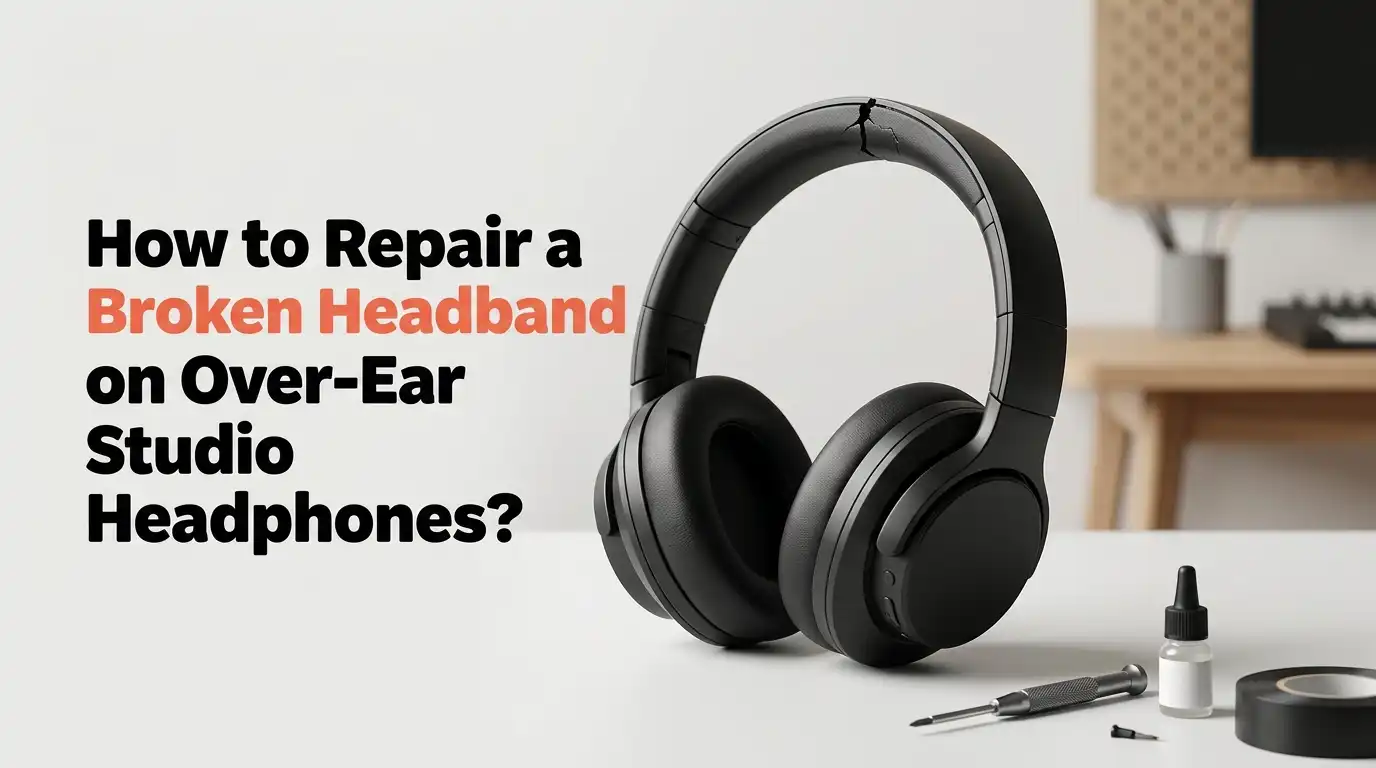
How to Repair a Broken Headband on Over-Ear Studio Headphones?
Your favorite studio headphones just snapped at the headband. The sound still works fine, but the plastic frame has cracked, split, or completely broken in half. You feel that sinking feeling because replacing a quality pair costs a lot of money.
Good news. A broken headband is one of the most fixable problems on over-ear studio headphones. You can repair most cracks at home using basic tools and supplies. Many fixes last for years when you use the right method.
This guide walks you through every working repair option. You will learn glue methods, plastic welding, metal reinforcement, and full headband replacement. You will also find tips to stop future breaks before they happen.
In a Nutshell
- Identify the break type first. A clean snap repairs easily with epoxy or plastic welder. A shattered or missing piece needs metal reinforcement, a 3D printed part, or a full headband swap.
- Super glue alone fails fast. Plain cyanoacrylate cracks again within days under headband tension. Use two part epoxy, JB Weld plastic bonder, or a plastic welding tool for strong, long lasting bonds.
- Reinforcement matters more than glue. Wrap the repair with thin wire, a metal hairpin, paperclip strips, or fiber tape. This stops the crack from opening again under flex pressure.
- Replacement headbands cost less than you think. Brands like Beats, Sony, Bose, JBL, and Audio Technica have aftermarket headband kits available online for around 10 to 25 dollars.
- Padding repair is separate from frame repair. If the foam cushion is peeling but the plastic frame is fine, you only need a cushion cover or replacement pad.
- Prevention saves money. Store headphones flat, avoid stretching the band wider than needed, and never let pets or children near them.
Check the Damage Before You Start
Look at the headband closely under bright light. Find out exactly where the break sits and how it broke. A simple crack along the inside arch needs different treatment than a snapped pivot near the ear cup.
Studio headphones usually break in three spots. The top center of the headband, the side arms where the plastic flexes, or the small swivel joint near each ear cup. Each spot needs its own approach.
Take a photo of the damage before you touch anything. This helps you remember which piece goes where. Mark the front side with a small piece of tape. Many headbands look symmetrical but the wiring inside runs only one way.
Gather the Right Tools and Supplies
A good repair starts with good supplies. You do not need a full workshop, but a few items make a huge difference in the final result.
For most fixes, grab these items: two part plastic epoxy (JB Weld PlasticWeld or similar), fine sandpaper (200 to 400 grit), rubbing alcohol, cotton swabs, rubber bands or small clamps, thin metal wire or steel paper clips, and a small flat screwdriver.
For stronger jobs, add a soldering iron for plastic welding, baking soda (it works as a glue accelerator and filler), and electrical tape or fabric tape for the final wrap. Keep paper towels nearby. Epoxy gets messy fast and you want a clean work surface.
Method 1: Two Part Epoxy Repair
Two part epoxy is the most reliable home fix for a clean break. It bonds plastic strongly and stays flexible enough to handle daily use.
Start by cleaning both broken edges with rubbing alcohol. Let them dry. Roughen each surface lightly with sandpaper so the glue grips better. Mix equal parts of the epoxy on a piece of cardboard for about 30 seconds.
Apply a thin layer to both broken edges. Press the pieces together and hold them in place with rubber bands. Wipe away any squeeze out with a cotton swab. Let it cure for 24 hours without stress.
Pros: Strong bond, paintable, works on most plastics, cheap, and easy for beginners.
Cons: Slow cure time, can look bulky if applied thick, and may fail without reinforcement on high stress areas.
Method 2: Super Glue and Baking Soda Trick
This old school hack works surprisingly well for small cracks. The baking soda reacts with super glue and creates a hard, concrete like patch in seconds.
Hold the broken pieces together. Sprinkle a thin layer of baking soda along the crack line. Drip super glue (cyanoacrylate) onto the powder. It hardens almost instantly into a solid filler.
Build up the layer if needed. Sand it smooth once fully set. This method works great for filling small gaps or rebuilding missing chunks of plastic on the headband.
Pros: Fast, cheap, fills gaps well, no clamping needed, and easy to shape.
Cons: Brittle under flex, ugly white color, hard to paint smoothly, and may crack again on the headband arch where tension is highest.
Method 3: Plastic Welding with a Soldering Iron
Plastic welding gives you the strongest possible repair because it actually fuses the plastic itself. You melt the two sides together instead of adding glue between them.
Heat a soldering iron to medium temperature. Press the broken edges together. Drag the iron tip slowly along the crack so the plastic melts and flows into a single piece. Work in short sections to avoid burning the material.
For extra strength, melt small staples or wire mesh into the back side of the break. This locks the joint and stops future flex damage. Let the plastic cool fully before you test it.
Pros: Strongest possible repair, no glue residue, looks clean when done right, and the bond is permanent.
Cons: Needs practice, burns plastic if you go too hot, fumes can smell bad, and a damaged soldering tip after use.
Method 4: Metal Reinforcement Brace
Sometimes the plastic is too weak to hold any glue. A metal reinforcement brace fixes this by adding a new support layer along the headband.
Cut a thin strip of aluminum, a flat metal hairpin, or several straightened paper clips. Bend the metal to match the headband curve. Glue or epoxy it to the inside of the headband so it spans the break with at least one inch of overlap on each side.
Cover the metal with heat shrink tubing, fabric, or electrical tape to hide it. This method works even after the original repair fails. It also adds long term strength to weak spots.
Pros: Extremely strong, supports broken or missing plastic, hides under padding, and works on any headphone brand.
Cons: Adds weight, can look bulky if done poorly, and may scratch the user’s head if the metal pokes through.
Method 5: Cable Tie or Fabric Wrap Fix
This quick fix works as a temporary patch or as a permanent solution for hidden cracks under the headband padding. Cable ties grip plastic tight without any glue.
Place two or three thin cable ties around the broken section. Pull each one tight and trim the ends flush. Cover the ties with fabric tape or a stretchy fabric sleeve so they feel smooth against your head.
For a softer look, wrap the entire broken section with strong fabric tape (like gaffer tape or hockey tape). Layer the tape in alternating directions for extra hold. This looks neat and feels comfortable during long studio sessions.
Pros: No glue needed, super fast, removable, and gentle on the original plastic.
Cons: Looks unprofessional if visible, can loosen over time, and may shift during head movement.
Method 6: Replace the Whole Headband
If the damage is too severe, replacing the headband is often easier than repairing it. Many popular studio headphone models have replacement headband kits made by third party sellers.
Search online for your exact model plus the words “headband replacement.” Brands like Beats Studio 3, Sony WH 1000XM series, Bose QuietComfort, JBL, and Sennheiser HD all have aftermarket parts available. Most kits cost between 10 and 30 dollars.
Open the ear cups with a small screwdriver or plastic pry tool. Disconnect the wires gently, slide out the old headband, and install the new one. Follow a video tutorial for your specific model to avoid breaking the ribbon cables.
Pros: Like new feel, no visible repair marks, restores full strength, and replacement parts are affordable.
Cons: Requires careful disassembly, may void warranty, can damage wires if rushed, and not all models have parts available.
Fix a Torn Headband Cushion Separately
The plastic frame and the foam cushion are two different parts. If only the cushion is peeling, splitting, or flaking, you do not need to repair the frame at all.
Most studio headphones use a clip on cushion that pops off with light pressure. Peel off the old padding by rubbing it with your fingers or using painter’s tape to lift the flakes. Clean the surface with mild soap.
Snap on a replacement cushion or a universal headband cover sleeve. Stretchy sleeves work on almost any headphone model. They also add comfort during long mixing sessions and protect the headband from sweat damage.
Pros: Cheap, no tools needed, instant comfort upgrade, and protects the underlying plastic.
Cons: Universal covers may look loose, some adhesive cushions leave sticky residue, and matching the original color can be hard.
Test the Repair Safely
Never put repaired headphones on your head right after the glue dries. Test the strength first to avoid the bond failing during use.
Hold the headphones by both ear cups. Gently flex the headband as if you were stretching it to put on your head. Listen for any cracking sound and watch the repair line closely. If it holds firm, wear them carefully for short sessions first.
Avoid wearing repaired headphones around the neck. This puts constant flex on the band and breaks weak repairs fast. Store them on a stand or flat on a desk instead. Give the glue a full week before heavy daily use.
Prevent Future Headband Breaks
Most headband cracks happen because of bad habits, not bad design. A few small changes keep your headphones healthy for years.
Adjust the slider, not the headband. When you put on the headphones, extend the slider arms first instead of forcing the band open wider. This removes stress from the plastic arch.
Store your headphones on a hook, stand, or flat surface. Never leave them hanging from a desk corner or stuffed in a bag. Keep them away from heat sources like sunny windows, car dashboards, and radiators because heat weakens plastic over time. Pet teeth and toddler hands also love headbands, so keep them out of reach.
When to Take Them to a Professional
Some breaks go beyond DIY territory. If the wiring inside the headband is exposed, frayed, or pulled out, you risk shorting the drivers when you reassemble them.
Professional repair shops handle wire splicing, hinge replacement, and complex internal damage. Search for local audio gear repair shops, electronics repair centers, or send them to a specialty service. Brands like Sony, Beats, and Audio Technica also offer manufacturer repair programs for in warranty units.
Get a repair quote before you commit. If the fix costs more than half the price of a new pair, consider replacing the headphones instead. Professional repair makes the most sense for high end studio models worth several hundred dollars.
FAQs
Can I use hot glue to fix a broken headphone headband?
Hot glue works only as a short term fix. It stays flexible but breaks down under headband tension within weeks. Use two part epoxy or plastic welding for a permanent repair.
How long does an epoxy headband repair last?
A well done epoxy repair with proper surface prep and reinforcement lasts several years. Without reinforcement, it may crack again within a few months. Always add a metal brace or fiber tape wrap for the best results.
Will repairing the headband affect the sound quality?
No. The headband is a structural part, not part of the audio signal path. As long as you do not damage the internal wires during the repair, the sound stays exactly the same.
Are aftermarket replacement headbands as good as original ones?
Aftermarket headbands vary in quality. Reputable third party brands match the original feel closely. Cheap unbranded parts may feel weaker or fit loosely. Read reviews before you buy a replacement headband for your model.
Can I 3D print a new headband for my studio headphones?
Yes, if you have access to a 3D printer. Many users upload free headband models for popular brands on sites like Thingiverse and Printables. Use strong filaments like PETG or nylon for the best durability. PLA cracks too easily for daily wear.
What is the best glue for plastic headphone parts?
Two part plastic epoxy like JB Weld PlasticWeld or Loctite Plastic Bonder works best. These bond ABS, polycarbonate, and other common headphone plastics. Avoid plain super glue because it fails under flex.
How do I know if my headband is cracked inside the padding?
Press along the headband with your fingers. Feel for any soft spots, clicking sounds, or unusual flex. Remove the padding cover if possible and look for visible cracks underneath. Hidden cracks often grow slowly before snapping fully.

Hi, I’m Archie Flynn, the founder and writer behind RapidResizerHub! 👋 I’m a passionate tech enthusiast who loves exploring the latest gadgets, smart devices, and trending electronics on Amazon. Through my honest, hands-on reviews and detailed buying guides, I help readers make smarter, well-informed shopping decisions.