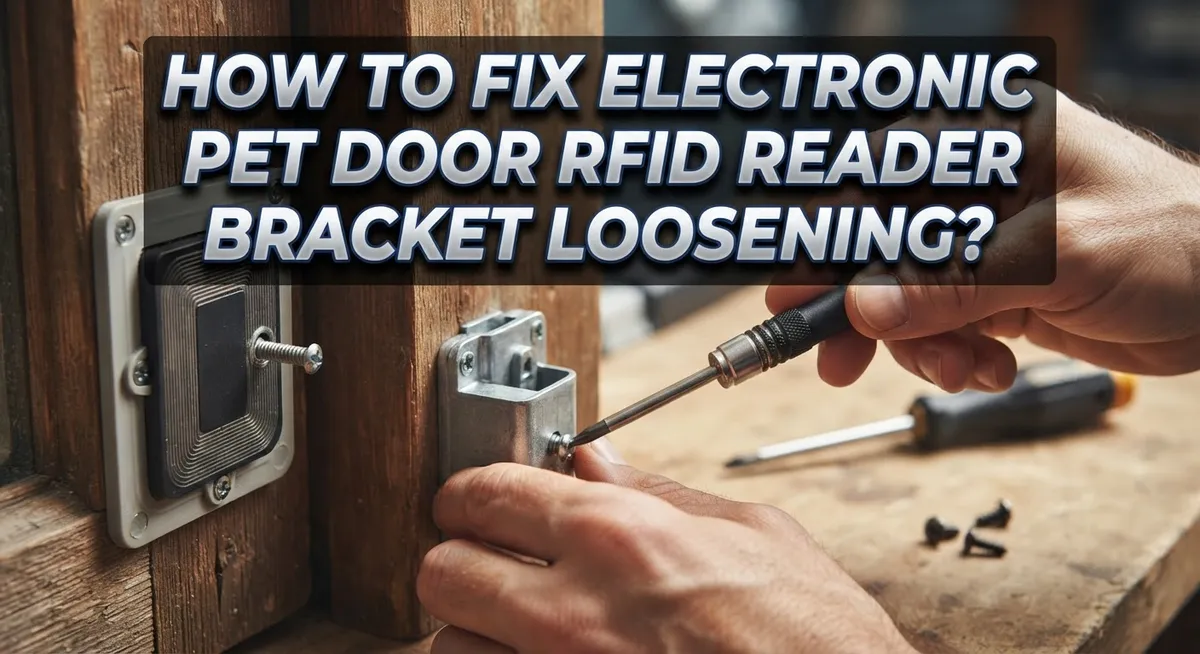
How To Fix Electronic Pet Door RFID Reader Bracket Loosening?
Your electronic pet door works great until the RFID reader bracket starts to wiggle. Suddenly your pet’s collar tag takes longer to scan. The door hesitates or fails to unlock at all.
This small mechanical issue causes big frustration. Your furry friend waits at the door while the sensor struggles to read the chip correctly.
A loose bracket is actually one of the most common problems with electronic pet doors. It happens from daily use, weather changes, or simple wear and tear over time.
The good news? You can fix this problem yourself. You do not need to call a technician or buy a whole new door system.
In a Nutshell
- Check the bracket first. Look for cracks, stripped screws, or gaps between the bracket and the door frame.
- Tighten loose screws. Most wobbling happens because screws work themselves loose over time. A simple screwdriver often solves this.
- Use the right tools. You need a screwdriver, replacement screws, and sometimes wood filler or epoxy for stripped holes.
- Reinforce weak spots. If the original screw holes are damaged, fill them before reinserting screws. This gives the bracket a solid grip again.
- Test the reader after fixing. Make sure your pet’s collar tag still triggers the door properly once the bracket feels secure.
- Prevent future loosening. Check the bracket every few months. Regular checks stop small wiggles from turning into bigger repairs.
- No special skills needed. This is a simple DIY fix. Most pet owners finish it in under thirty minutes with basic household tools.
Understanding Why RFID Reader Brackets Loosen Over Time
Your electronic pet door’s RFID reader bracket loosens for several practical reasons. Understanding these causes helps you prevent the problem from happening again.
Vibration is the main culprit. Every time your pet pushes through the door, the door frame moves slightly. This constant movement shakes the bracket back and forth. Over weeks and months, screws gradually work their way loose from this repeated vibration.
Temperature changes also play a role. Your door frame expands when it gets hot and contracts when it cools down. Wood, plastic, and metal all respond differently to temperature shifts. This expansion and contraction cycle slowly loosens the screws that hold your bracket in place.
Moisture causes another problem. If your pet door sits in a humid area or gets wet from rain, the wood around the screw holes swells. When the wood dries out, it shrinks. This swelling and shrinking cycle weakens the grip that screws have on the material.
Poor initial installation is often overlooked. If the bracket wasn’t secured tightly from the start, it will loosen faster. Sometimes screws were installed at an angle or didn’t go in deep enough. These installation mistakes catch up with you over time.
Material fatigue happens too. The bracket itself experiences stress every single day. The metal or plastic can weaken slightly with age, making it harder to stay firmly attached. The screw holes may become stripped or enlarged, especially in softer materials.
Finally, the door’s weight matters. A heavy pet door puts more pressure on the bracket. This extra weight increases vibration and stress on all connection points. Heavier doors loosen their brackets faster than lighter ones.
Knowing these causes helps you take action. Regular inspections catch loosening early. Proper installation techniques prevent most problems. Using the correct screw size and material makes a big difference. Your bracket stays secure when you understand what causes it to loosen in the first place.
Tools and Materials You Will Need
Before you start working on your loose RFID reader bracket, gather the right supplies. Having everything ready makes the job faster and easier.
A screwdriver set is essential. You need both Phillips and flathead options. Most pet door brackets use Phillips screws, but you may encounter flathead varieties. A multi bit screwdriver saves space and keeps you organized.
Replacement screws matter more than you think. Bring the old screws with you if you shop for new ones. Match the size, length, and thread type exactly. Stainless steel screws resist rust better than regular steel, especially in damp areas near pet doors.
Wood filler or epoxy handles stripped holes. When screw holes become enlarged or damaged, simple tightening won’t work. Wood filler works well for wooden door frames. Epoxy suits metal frames better. These materials fill gaps and create a solid foundation for new screws.
A drill might be necessary too. If you need to create new screw holes or enlarge existing ones slightly, a basic drill helps. A small bit size prevents splitting or cracking your door frame.
Sandpaper smooths rough edges. After filling holes with epoxy or wood filler, light sanding creates a clean surface. This step ensures screws seat properly.
A level or straightedge keeps things aligned. Before final tightening, check that your bracket sits straight. Uneven mounting causes future problems and reader malfunction.
Cleaning supplies remove debris. Dust and dirt accumulate in bracket crevices. A dry cloth or soft brush clears these areas. Clean surfaces help screws grip better.
Safety glasses protect your eyes. Debris flies when drilling or tightening. Glasses are cheap insurance against injury.
Gather these items before starting work. You’ll avoid frustrating trips back to the garage or storage area mid repair.
Step-by-Step Guide to Tightening the RFID Reader Bracket
Start by turning off your electronic pet door completely. This keeps you safe while working on the bracket and prevents accidental door activation during repairs.
Locate all the screws holding the RFID reader bracket in place. Most brackets use between four and six screws. Mark their positions with a small piece of tape or take a photo. This helps you remember where each screw goes if you remove them.
Use the correct screwdriver size for each screw. A screwdriver that’s too small will slip and damage the screw head. A screwdriver that’s too large won’t fit properly into the slot.
Turn each screw clockwise slowly and steadily. Don’t force screws that resist turning. Forced screws can snap and create bigger problems.
Check the bracket’s position as you tighten. The bracket should sit flush against the door frame with no visible gaps. If gaps remain after tightening, the bracket itself may be bent or the mounting surface may be uneven.
Tighten screws in a cross pattern if your bracket has four screws. This means tightening the top left, then bottom right, then top right, then bottom left. This approach distributes pressure evenly and prevents the bracket from tilting.
For brackets with six screws, tighten in alternating directions. This keeps the bracket level and stable.
Once all screws feel snug, wiggle the bracket gently with your hand. It shouldn’t move at all. A solid bracket won’t flex or shift when you apply light pressure.
Reactivate your pet door and test it several times. Listen for any unusual sounds or vibrations that suggest the bracket is still loose. Your pet’s collar tag should trigger the door smoothly and consistently.
Mark your calendar to check this bracket again in three months. Regular inspections catch loosening early before serious problems develop.
Reinforcing the Bracket for Long-Term Stability
Once your bracket feels secure, you need to think about keeping it that way. Reinforcement goes beyond simple tightening. It’s about making your RFID reader bracket strong enough to handle months of use without problems.
Upgrade your fasteners for better holding power. Standard screws work fine initially, but they can loosen over time. Consider using screws with better grip properties. Locking screws have special features that prevent spinning. They stay put even when vibration shakes your pet door repeatedly.
Add a protective barrier between the bracket and mounting surface. Small rubber or foam pads create a buffer zone. These pads absorb vibration energy before it reaches your screws. They also help distribute pressure more evenly across the bracket. This simple step reduces stress on individual fastening points.
Reinforce the screw holes themselves. If your pet door has a wooden frame, the holes can enlarge over time. Wood filler mixed with epoxy creates a stronger foundation for screws. Let this mixture dry completely before reinstalling your bracket. The new material provides better grip than aged or damaged wood.
Check for bracket damage or bending. A bent bracket won’t sit flush against the surface, even when screws are tight. Inspect it carefully for warping or dips. If damage exists, the bracket may need replacement to work properly.
Apply a thin layer of thread locking compound. This special liquid prevents screws from rotating. It doesn’t make removal impossible, but it does resist vibration effectively. Use the removable type so you can still service the bracket later if needed.
Inspect the bracket mounting area for cracks or weakness. A cracked frame won’t hold fasteners securely no matter what you do. Address frame damage before reinforcing the bracket. Your pet door’s structural integrity comes first.
These reinforcement steps create lasting stability for your RFID reader bracket.
Testing the RFID Reader After Repair
After you repair and tighten your RFID reader bracket, testing comes next. This step confirms your repair actually works and your pet can use the door safely.
Start with a visual inspection first. Look at the bracket from different angles. Check that it sits flat against the mounting surface with no gaps or tilting. Run your fingers around the edges to feel for any movement or flexing.
Next, power on your electronic pet door. Wait for it to complete its startup cycle. Most pet doors have a light or sound that indicates they’re ready to operate.
Test the RFID reader with your pet’s collar tag. Hold the tag near the reader at various distances and angles. The reader should respond consistently every time. Listen for beeping sounds or watch for light indicators that show the reader detects the tag.
Move the tag slowly around the reader’s face. Test from above, below, and both sides. The reader should work from all directions. If it only works from certain angles, the bracket may still be slightly misaligned.
Perform several complete door cycles. Watch how the door opens and closes. Listen for unusual sounds or grinding noises that suggest misalignment. The door should operate smoothly without hesitation.
Leave the door inactive for a few minutes. Then test again. This helps you spot any problems that emerge after normal operation.
Check the bracket screws one more time after testing. Sometimes vibration from door movement can cause slight loosening. If screws have moved, tighten them again and note this pattern.
Document your testing results. Write down what worked and any issues you noticed. This information helps if problems return later. Keep this record with your pet door maintenance schedule for future reference.
Common Mistakes That Cause Repeated Loosening
Using the wrong fastener size creates gaps between your bracket and the mounting surface. When you install screws that are too short, they don’t grip the material deeply enough. This leaves room for vibration and movement. Always measure your bracket thickness before purchasing fasteners.
Overtightening screws causes another common problem. Many people assume tighter means more secure, but this damages the threads inside your bracket holes. Stripped threads cannot hold screws properly, and they slip loose almost immediately. Turn each screw only until it feels snug, not until it stops moving.
Ignoring vibration from your pet door is a major mistake. Every time your pet uses the door, small vibrations travel through the frame and loosen fasteners. If you tighten your bracket once and never check it again, loosening will happen within weeks. Plan regular inspection visits to catch problems early.
Mounting your bracket on an unstable surface guarantees repeated loosening. Wood frames expand and contract with temperature changes. Plastic bases flex when your pet pushes through the door. Metal frames can develop small cracks that shift the bracket position. Choose the most solid mounting location available.
Mixing different screw types creates inconsistent pressure across your bracket. Some fasteners grip better than others, so uneven tightening occurs. Use identical screws throughout your entire bracket installation.
Failing to clean the mounting area before installation traps dirt and dust. These particles prevent your bracket from sitting flush against the surface. Your screws tighten against air pockets instead of solid material. Wipe both the bracket and mounting surface with a dry cloth before starting work.
Skipping the cross pattern tightening method causes uneven pressure. When you tighten screws randomly, one side pulls tighter than the other. Your bracket tilts slightly and creates weak points. Always alternate between opposite screws during tightening.
Troubleshooting Persistent Bracket or Reader Issues
When your RFID reader bracket keeps loosening despite your repair efforts, a deeper problem likely exists. Persistent loosening points to issues beyond simple screw tightness. You need to diagnose what’s actually causing the problem.
Start by examining the bracket mounting surface itself. Is the surface flat and even? Run your hand across it to feel for bumps, dents, or warping. An uneven surface means your bracket rocks back and forth, which loosens screws no matter how tight you make them. If you find an uneven area, you may need to sand it down or use shim material to create a level base.
Next, check if vibration is the culprit. Your pet door creates constant vibration when it opens and closes. This vibration acts like a tiny hammer hitting your screws repeatedly. Over time, even tight screws work loose. You can reduce vibration by adding rubber isolation pads between your bracket and mounting surface. These pads absorb shock and prevent the bracket from moving.
Inspect your screw holes carefully. Are they stripped or enlarged? If holes are damaged, new screws won’t grip properly. Stripped holes in wood require larger diameter screws or wooden dowels inserted into the holes first. For plastic or metal, you may need threaded inserts that create fresh threads.
Check the bracket itself for cracks or bending. A damaged bracket won’t sit flush no matter what you do. Even small bends prevent even pressure distribution across all screw points. This uneven pressure causes some screws to loosen while others stay tight.
Finally, verify you’re using the correct fastener specifications. Wrong sized screws create loose connections. Consult your pet door manual for exact screw sizes and materials. Using the right fasteners with proper installation techniques should resolve persistent loosening problems.
Final Thoughts
A loose RFID reader bracket is a simple fix. You just need the right steps and a little patience.
Most bracket problems come from three things. Worn holes, wrong screws, or skipped maintenance checks. Fix these three, and your bracket stays put.
Regular checks make a big difference. Look at your bracket every few weeks. Catching a small wobble early stops a bigger problem later.
Your pet’s safety depends on this reader working right. A loose bracket can shift the reader’s position. This causes missed reads and a door that won’t open.
Don’t rush the repair process. Take time to clean the surface first. Use the correct screws for your specific door model.
Thread locking compound helps in many cases. But it works best on a properly cleaned and prepped surface. Skipping prep work reduces its effectiveness.
Testing after every repair matters too. A quick test now saves you frustration later. Check the reader from different angles and distances.
If problems keep coming back, look deeper. The mounting surface itself might be the real issue. Sometimes the door frame needs attention, not just the bracket.
Vibration is often the hidden cause. Every time your pet uses the door, it shakes the frame slightly. Over time, this loosens even well tightened screws.
Keep a simple log of your repairs. Note what you fixed and when. This helps you spot patterns if the problem returns.
Most pet owners can handle this repair themselves. You don’t need special tools or advanced skills. Basic hand tools and careful attention get the job done.
A stable bracket means a happy pet and a working door. Your furry friend gets reliable access. You get peace of mind knowing the system works.
Take these steps seriously, and your RFID reader bracket should stay secure for a long time.
Frequently Asked Questions
Why does my RFID reader bracket loosen so quickly after I tighten it?
Your bracket loosens fast because of vibration from your pet door opening and closing. Each time your pet uses the door, small movements shake the bracket. Screws gradually back out over time without thread locking compound. The mounting surface might also have dirt or dust trapped underneath, creating gaps.
Check if your bracket is on a stable surface. Unstable walls or loose door frames make loosening happen faster. Your screw holes might also be worn out from repeated tightening and loosening.
What’s the best way to prevent my bracket from loosening in the future?
Use thread locking compound on all screws before installation. This substance hardens and keeps screws from backing out due to vibration. Clean your mounting surface completely before you attach the bracket. Remove all dust and debris so the bracket sits flat and tight.
Tighten screws using the cross pattern method. This means tightening opposite corners instead of going around in a circle. The cross pattern spreads pressure evenly across your bracket.
Check your bracket monthly. A quick inspection takes just a few minutes and catches problems early. Perform several complete door cycles each time you check. This helps you spot any movement or shifting right away.
Can I use any type of screw for my pet door bracket?
No. You must use the exact fastener size and type specified in your pet door manual. Using wrong screws creates gaps between your bracket and the mounting surface. These gaps let your bracket move around even when screws feel tight.
Mixing different screw types is a major mistake. Each type applies pressure differently. Your bracket needs consistent pressure across all mounting points to stay secure.
How do I know if my bracket is damaged beyond repair?
Inspect your bracket carefully for cracks or visible bending. Damaged brackets cannot hold your RFID reader in the correct position. Look at the screw holes too. If holes are stripped or enlarged, your screws won’t grip properly anymore.
If your bracket is cracked, bent, or has stripped holes, replacement is your best option. A damaged bracket cannot be safely repaired with tightening alone.

Hi, I’m Archie Flynn, the founder and writer behind RapidResizerHub! 👋 I’m a passionate tech enthusiast who loves exploring the latest gadgets, smart devices, and trending electronics on Amazon. Through my honest, hands-on reviews and detailed buying guides, I help readers make smarter, well-informed shopping decisions.