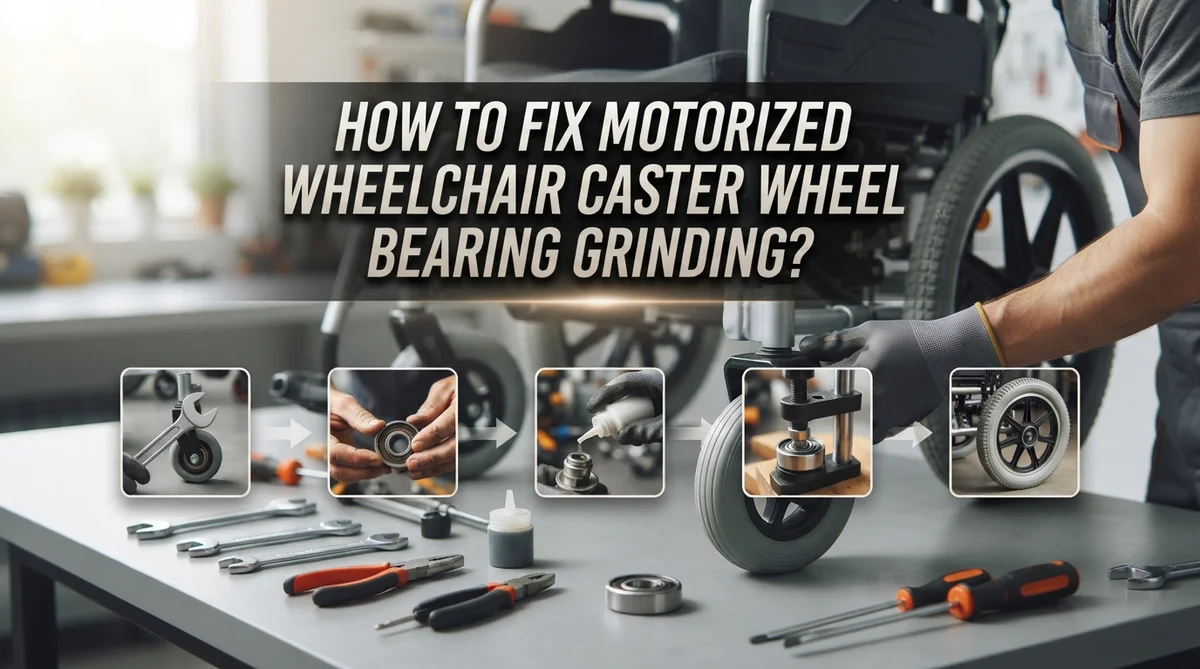
How To Fix Motorized Wheelchair Caster Wheel Bearing Grinding?
That annoying grinding sound from your wheelchair caster wheel can feel alarming. You rely on smooth movement every day. A sudden noise makes you wonder if something is seriously wrong.
The good news is most caster wheel bearing issues are simple to fix. You do not need to be a mechanic. You just need the right steps and a little patience.
Grinding noises usually point to a few common problems. Your bearings might need cleaning and fresh lubricant. They could be misaligned inside the wheel housing. Sometimes the bearings themselves wear out and need replacing.
This guide walks you through each possibility. You will learn how to clean and lubricate your bearings properly. We will show you how to check for misalignment and fix it safely. You will also discover when a full bearing replacement makes more sense than a repair.
By the end, you will know exactly what that grinding sound means. You will have clear steps to silence it yourself. No special skills or expensive tools required. Let’s get your wheelchair rolling smoothly and quietly again.
In a Nutshell
Here’s a quick summary to help you fix that grinding caster wheel fast:
-
Check the axle first. A loose axle often causes wobbling and grinding. Tighten it before doing anything else.
-
Clean the bearings completely. Dirt and debris build up inside and cause friction. Remove all grime before you lubricate.
-
Use silicone based lubricant only. This keeps bearings smooth without damaging seals. Avoid WD-40 at all costs.
-
Realign bearings if they sit crooked. A hammer and insert tool can gently push them back into place.
-
Inspect for damage after cleaning and lubricating. If grinding continues, the bearing likely has wear that needs attention.
-
Replace damaged bearings when servicing does not solve the problem. This is a straightforward task most users can handle alone.
-
Service bearings regularly. Routine cleaning and re-greasing prevents future grinding and extends bearing life.
Following these steps in order helps you pinpoint the exact cause. Most fixes take just a few minutes with basic tools. You will have your wheelchair rolling smoothly again in no time.
Understanding Caster Wheel Bearings and Why They Grind
Caster wheel bearings are small metal balls held inside a race. They allow your wheelchair’s front wheels to spin smoothly and turn freely. When everything works right, you barely notice them.
A grinding noise means something has gone wrong inside that bearing system. The metal balls may have lost their protective grease coating. Dirt and debris can get trapped between the balls and the race. Metal surfaces start rubbing together directly, creating that uncomfortable grinding sound.
Bearings grind for three main reasons. First, they dry out from lack of lubrication. Grease keeps the metal parts separated and protected. Without it, friction increases and grinding starts. Second, bearings can become misaligned. If the wheel sits at an odd angle, the balls don’t roll smoothly. Third, bearings wear down over time from normal use. The metal surfaces develop flat spots or tiny cracks.
The grinding sound acts as your wheelchair’s warning system. It tells you something needs attention before serious damage happens. Ignoring it can make the problem worse and harder to fix later.
Most grinding issues are fixable at home. You don’t need special skills or expensive tools. The key is understanding what caused the grinding in the first place.
Your axle plays a critical role here too. A loose or wobbly axle often contributes to bearing problems. The wheel shifts side to side, putting pressure on the bearings unevenly. Always check that your axle sits tight and secure before assuming the bearings themselves are damaged.
Catching grinding early saves you time and frustration. Regular maintenance prevents most bearing problems from starting.
Signs Your Caster Wheel Bearings Need Attention
A grinding noise coming from your caster wheel is your wheelchair telling you something needs attention. Pay close attention to when the sound happens because timing matters. Does it grind only when you turn? Does it grind during straight movement? Does it grind when the wheel bears weight?
Listen for the sound’s characteristics too. A high pitched grinding differs from a low rumbling sound. High pitched grinding often means metal touching metal inside the bearing. Low rumbling might indicate debris caught between bearing parts. The loudness also tells you something. A faint grinding means the problem is early stage. A loud grinding means you should address it soon.
Feel for vibration in the wheel while it rolls. Place your hand near (not touching) the spinning wheel and notice if you feel shaking or wobbling. Vibration combined with grinding usually points to bearing misalignment or wear.
Check if the grinding gets worse over time. Does it sound the same today as it did last week? Worsening grinding means the damage is progressing. This is your signal to act faster.
Notice if the wheel pulls to one side. A grinding bearing sometimes causes the wheelchair to drift during straight movement. This happens because the damaged bearing creates friction that slows one wheel more than the other.
Temperature changes matter too. Some bearings grind more when cold and improve when warm. This suggests the lubricant has thickened from cold temperatures rather than actual bearing damage.
Document these observations. Write down when the grinding started, how loud it is, and what movements trigger it. This information helps you determine whether cleaning and lubricating will solve the problem or if bearing replacement is necessary.
Tools and Supplies You’ll Need Before You Start
Before you start fixing that grinding sound, gather the right tools and supplies. Having everything ready makes the job faster and prevents frustration halfway through.
You will need a wrench set to remove the caster wheel from your wheelchair frame. Most caster wheels use standard bolt sizes, so a basic wrench assortment works well. A socket set gives you more grip options if bolts sit tight.
Lubricant matters more than anything else. Get silicone based lubricant specifically. This type protects bearings without damaging seals. Avoid WD-40 completely, as it actually washes away grease and creates more problems.
Grab clean rags or paper towels for wiping away old grease and dirt. Bearings need thorough cleaning before you add new lubricant. Old grease traps debris that causes grinding sounds.
You may need a small hammer and a metal insert tool or punch for realigning bearings. These tools help tap bearings back into proper position if they shifted sideways.
A flashlight or headlamp helps you see inside the bearing housing clearly. Shadows hide important details you need to spot.
Keep a container nearby for holding small parts while you work. Bearings and springs can roll away easily on hard floors.
Have a work surface ready like a table or sturdy board. Working at a comfortable height reduces strain on your arms and back.
Finally, grab your wheelchair’s manual or take photos before disassembly. Pictures help you remember exactly how pieces fit back together.
Most of these items sit in typical home toolboxes already. You probably own everything needed without buying anything new. Start gathering now so you can move forward confidently.
Step-by-Step: Cleaning and Re-Lubricating the Bearings
Start by removing the caster wheel from your wheelchair using your wrench set. Place the wheel on your work surface where you have good lighting. Use your flashlight to examine the bearing housing carefully.
Look for dried grease, dirt, and debris packed around the bearing. This buildup restricts movement and causes grinding sounds. Grab your clean rags and wipe away all visible dirt from the outside of the bearing housing.
Next, you need to access the bearing itself. Depending on your wheelchair model, you may need to remove a bearing cap or seal. Work slowly here since these parts are small and easy to lose. Place removed components in your container so nothing gets misplaced.
Once exposed, use your rag to clean out old grease thoroughly. Wipe the bearing balls, the races they roll in, and the surrounding surfaces. Don’t rush this step. Proper cleaning removes contaminants that cause grinding.
Inspect the bearing as you clean. Look for rust, pitting, or visible damage on the metal surfaces. Small scratches are normal, but deep gouges or discoloration mean replacement is needed later.
After cleaning completely, apply your silicone based lubricant according to the product instructions. Avoid using WD-40 or general purpose oils as these damage bearing seals and wash away quickly.
Work the lubricant into the bearing by rotating the wheel by hand several times. You should feel resistance ease as lubrication distributes evenly. Wipe away excess lubricant with a clean rag.
Reinstall any bearing caps or seals you removed. Reattach the wheel to your wheelchair and test it. Listen for grinding sounds and feel for smooth rotation. The bearing should move freely without noise now.
Step-by-Step: Realigning or Replacing Worn Bearings
If cleaning and lubrication didn’t stop the grinding, your bearings likely have alignment issues or damage. This section walks you through realigning or replacing them safely.
Check the axle first. A loose axle causes most grinding problems. Use your wrench to tighten the axle bolt completely. Spin the wheel by hand. If it still wobbles, the axle needs attention before you proceed with bearing work.
For realignment, you’ll work with the bearing housing directly. Remove the caster wheel again and locate where the bearing sits inside its housing. Look for visible wear marks or flat spots on the bearing surface. These indicate misalignment.
Use your small hammer and metal insert tool gently. Position the insert tool against the bearing edge. Tap lightly with the hammer to shift the bearing back into proper position. Make small adjustments. Test the wheel movement between taps.
If realignment doesn’t eliminate grinding after several attempts, the bearing has likely worn beyond repair. Replacement becomes necessary at this point.
To replace a bearing, you’ll need to remove it from the housing completely. Some bearings press fit, requiring careful removal with your hammer and insert tool. Work slowly to avoid damaging the housing itself. Clean the bearing cavity thoroughly before installing a new bearing.
Press the new bearing into place using your hammer and insert tool, applying even pressure around the bearing edge. The bearing should sit flush in its housing. Spin it by hand to confirm smooth rotation.
Reinstall your caster wheel. Tighten all bolts securely. Test the wheelchair on a flat surface. Listen carefully for any remaining noise. The grinding should be completely gone.
Checking Axle Tightness and Wheel Alignment
A loose axle is the most common reason your caster wheel grinds. Before you take apart the bearing, check if the axle bolt is tight. Use your wrench to turn it clockwise and see if it needs tightening.
Spin the wheel by hand while holding the axle steady. If the wheel wobbles side to side, the axle is definitely loose. Tighten it firmly, but don’t force it so hard that you strip the threads. A properly secured axle should feel solid with no movement.
After tightening, spin the wheel again and listen. Sometimes the grinding stops right here. If it does, you’ve solved the problem without deeper work.
Now check wheel alignment. The wheel should spin straight without tilting toward the frame or away from it. Look at the gap between the wheel and the wheelchair frame. It should be even on both sides.
If the gap is wider on one side, the wheel is misaligned. This misalignment puts pressure on the bearing and causes grinding. Gently tap the wheel using your hammer and insert tool to shift it into proper position. Make small adjustments and test the alignment after each tap.
Proper alignment means the wheel sits parallel to the frame. The bearing sits inside the housing without stress when everything lines up correctly.
Check the axle tightness again after any realignment work. Misalignment sometimes causes the axle to loosen over time. A secure axle plus correct wheel alignment eliminates most grinding problems before you need to service the bearing itself.
Common Mistakes That Make Grinding Worse
Using the wrong lubricant is one of the biggest mistakes people make. Many wheelchair users reach for WD-40 because it’s common and easy to find. However, WD-40 is a penetrating oil, not a bearing lubricant. It actually damages bearing seals and washes away protective grease instead of replacing it. Always use silicone-based lubricant for your caster wheel bearings.
Skipping the cleaning step before lubrication causes major problems. Some people apply new lubricant directly over old, dried grease and debris. This traps dirt inside the bearing, which makes grinding worse, not better. The old grease mixed with new lubricant creates a gritty paste that accelerates wear.
Neglecting to check your axle tightness is another critical error. A loose axle often causes the grinding noise people mistake for bearing damage. Many wheelchair users jump straight to bearing replacement when simply tightening the axle solves the problem. Always verify the axle is secure before assuming your bearing needs service.
Over-lubricating is equally damaging. Excess lubricant attracts dirt and creates friction inside the bearing housing. More grease doesn’t mean better performance. Apply lubricant according to product instructions, then work it through by rotating the wheel several times by hand.
Ignoring alignment issues compounds the problem. A misaligned wheel puts stress on the bearing, causing continued grinding even after cleaning and lubrication. Check that your wheel sits parallel to the frame after any service work.
Taking time to avoid these mistakes prevents unnecessary damage and keeps your caster wheels rolling smoothly. Proper maintenance extends bearing life significantly.
Troubleshooting Persistent Noise After Repair
When grinding noise returns after you’ve completed repair steps, the issue usually falls into a few specific categories. Check your work first. Sometimes the axle loosens again during wheel rotation. Spin the wheel by hand while holding the axle steady. If it wobbles, tighten it fully and test the wheel again.
Persistent grinding often means the bearing still has debris trapped inside. Remove the bearing housing once more and inspect the bearing surface carefully. Look for dark spots, pitting, or visible damage on the metal races. These signs indicate the bearing has worn beyond cleaning and lubrication.
If the bearing looks clean but grinding continues, misalignment might be the culprit. Check that the wheel sits parallel to your wheelchair frame. A gap wider on one side means the bearing housing shifted during your repair work. Gently tap the housing back into proper position using your hammer and metal insert tool.
Test after each adjustment. Spin the wheel and listen closely. The noise should decrease with each correction.
If grinding persists after checking axle tightness, cleaning thoroughly, and realigning the housing, bearing replacement is your next step. The bearing has likely developed internal damage you cannot see from outside. Worn bearings cannot be restored through lubrication alone.
Document what you find during troubleshooting. Note whether the bearing surface showed damage, whether the axle was loose, or whether misalignment was present. This information helps you identify patterns in future maintenance. Some users find their caster wheels grind again after several months, which is normal wear. Regular inspection prevents grinding from becoming severe.
Final Thoughts
Fixing a grinding caster wheel bearing does not need to be scary. Most problems come from dirt, dry bearings, or loose axles. You can solve these issues at home with basic tools.
Start simple every time. Clean the bearing first. Then add proper lubricant. These two steps solve many grinding problems without any replacement.
Check your axle tightness before assuming the worst. A loose axle causes noise that sounds like bearing damage. Tighten it and test the wheel again.
If grinding continues, look at alignment. A misaligned wheel puts stress on the bearing. Realigning it often stops the noise completely.
Bearing replacement becomes necessary when wear is real. This happens after cleaning, lubricating, and realigning without success. It’s a normal part of wheelchair maintenance, not a sign of failure.
Regular care prevents most grinding issues from starting. Clean and lubricate your bearings on a schedule. This keeps dirt and moisture from building up inside.
Avoid harsh sprays like WD-40 near your bearings. These damage seals and attract more dirt over time. Stick to silicone based lubricants made for this job.
Patience matters during repairs. Test your wheel after each step you take. This helps you find the real cause instead of guessing.
You do not need a repair shop for most caster wheel problems. With cleaning, lubrication, alignment checks, and occasional bearing replacement, your wheelchair can run smoothly again.
Trust the process. Take it one step at a time. Your wheelchair deserves steady care, and now you have the skills to give it that care yourself.
Frequently Asked Questions
Why does my motorized wheelchair caster wheel make a grinding noise?
Grinding sounds come from three main causes. First, the bearing may lack proper lubrication. Second, dirt or debris can get trapped inside the bearing housing. Third, the bearing itself might be worn or damaged from regular use. A loose axle can also create grinding sounds as the wheel wobbles during movement.
Start by checking if your axle is tight. Spin the wheel and listen carefully. If the noise continues, the bearing likely needs cleaning and lubrication.
Can I fix the grinding noise myself without professional help?
Yes, most users can handle this repair at home. The process is straightforward and requires basic tools. You’ll clean the bearing, apply proper lubricant, check alignment, and test the wheel.
The key is following steps in order. Don’t skip cleaning, as dirt prevents lubricant from working correctly. If you’re unsure about any step, take your time and work slowly.
What lubricant should I use on my caster wheel bearings?
Use only silicone-based lubricant for wheelchair bearings. This type protects seals and won’t damage internal components. Avoid WD-40 and other harsh sprays, as they wash away grease and harm bearing seals.
Apply lubricant sparingly. Too much causes problems just like too little does. A small amount goes a long way inside the bearing housing.
When should I replace the bearing instead of servicing it?
Replace the bearing if you find visible damage, rust, or pitting after cleaning. If grinding persists after thorough cleaning and lubrication, replacement is likely needed. Worn bearings won’t improve with more grease.
Check for wear carefully before deciding to replace. Most bearings respond well to proper cleaning and lubrication first.

Hi, I’m Archie Flynn, the founder and writer behind RapidResizerHub! 👋 I’m a passionate tech enthusiast who loves exploring the latest gadgets, smart devices, and trending electronics on Amazon. Through my honest, hands-on reviews and detailed buying guides, I help readers make smarter, well-informed shopping decisions.