How To Fix Induction Cooktop Glass Top Scratching?
Do you see scratches on your induction cooktop glass top? You are not alone. Many people notice small marks after months of cooking.
Scratches can happen easily. Sliding a pan or using the wrong cleaner often causes them. Even sugar grains under a pot can scrape the surface.
The good news is that most scratches do not ruin your cooktop. Light scratches are usually just a surface issue. You can often improve their look with simple home methods.
In a Nutshell
- Light scratches often look worse than they really are. Most do not affect how your cooktop works.
- Always check the scratch depth first. Shallow marks can get buffed out with gentle care.
- Use a soft cloth and a cream made for glass tops. This helps reduce the look of small scratches.
- Avoid abrasive pads or rough sponges. They can make scratches deeper and harder to fix.
- Clean your cooktop right after each use. Food spills and grit can scratch the glass if left to sit.
- Place pans down gently instead of sliding them. This simple habit prevents new scratches from forming.
- If scratches are deep or widespread, a professional repair may be your safest option.
- Regular care keeps your glass top looking clear and smooth for years.
- Small changes in daily habits make a big difference over time.
Why Induction Cooktop Glass Tops Get Scratched
Your induction cooktop glass top scratches easily because the surface is made from tempered glass. This material is strong but not scratch resistant. Even small actions can leave marks on it.
Sliding cookware across the surface causes most scratches. When you move a pan or pot, friction between the metal bottom and glass creates lines. Heavy cookware makes this worse because more pressure pushes down during movement.
Abrasive cleaning tools damage the glass too. Rough sponges, steel wool, and scrubbing pads scratch the surface when you clean. Even some commercial cleaners contain particles that act like sandpaper on your cooktop.
Dust and debris trapped under your pans also scratch the glass. Sand, dirt, or food particles between the cookware and surface create tiny scratches over time. This happens even if you do not slide the pans around.
Hard water spots and burned on food make you scrub harder. When you apply more pressure to remove stubborn stains, you risk scratching the glass. The longer food sits on the surface, the more aggressive your cleaning becomes.
Temperature changes can weaken the glass slightly. Placing cold items on a hot cooktop or vice versa stresses the material. This stress makes the glass more prone to visible scratches.
Cookware with rough or damaged bottoms scratches easily. Pans with chips, cracks, or uneven surfaces catch on the glass. Even new cookware can have manufacturing imperfections that cause problems.
Finally, the way you set down cookware matters. Dropping pans or placing them at angles creates pressure points. These concentrated pressure areas scratch more easily than flat placement does.
Understanding these causes helps you prevent future damage. Your daily habits and cleaning methods play the biggest role in keeping your glass top smooth and clear.
Assessing the Damage: Light Marks vs Deep Scratches
Light scratches and deep scratches require different approaches. You need to know which type you have before taking action.
Light scratches appear as thin lines on your glass surface. They catch the light but do not create grooves you can feel with your fingernail. These marks usually sit on the top layer of the glass. Most light scratches fade over time or become less visible when the cooktop is clean.
To check if a scratch is light, run your fingernail across it gently. If your nail does not catch or dip into the line, the scratch is likely surface level. Light scratches often look worse when the glass is dirty or wet. Cleaning the cooktop thoroughly can make them nearly invisible.
Deep scratches are different. These create actual grooves in the glass surface. Your fingernail will catch or feel a dip when you run it across a deep scratch. You might even see white or cloudy marks inside the groove. Deep scratches go through the protective layer of the glass.
Deep scratches pose a real problem. They can spread over time, especially if you continue using the cooktop normally. Heat and pressure from cooking can make existing deep scratches worse. Water or cleaning liquid can seep into deep grooves and cause further damage.
Assess your scratch carefully before deciding on a fix. Look at it from different angles and in good lighting. Feel the surface with your fingernail to measure depth. Check how many scratches exist and where they are located.
Light scratches scattered across the surface need basic maintenance. Deep scratches, especially near the center or in clusters, may require professional help. A single deep scratch near the edge differs from multiple deep scratches across the cooking zone.
Understanding the damage type helps you choose the right solution. This assessment takes just a few minutes and guides your next steps effectively.
Step-by-Step: Fixing Minor Scratches on Your Cooktop
Now that you understand your scratch depth, it’s time to fix those minor marks. The process is straightforward and takes only a few minutes.
Start by turning off your cooktop completely. Let it cool to room temperature. A warm surface makes the cleaning solution dry too fast and leaves streaks.
Wipe the entire surface with a damp microfiber cloth. Remove all dust, food particles, and debris. This step prevents you from grinding dirt into the scratches during repair.
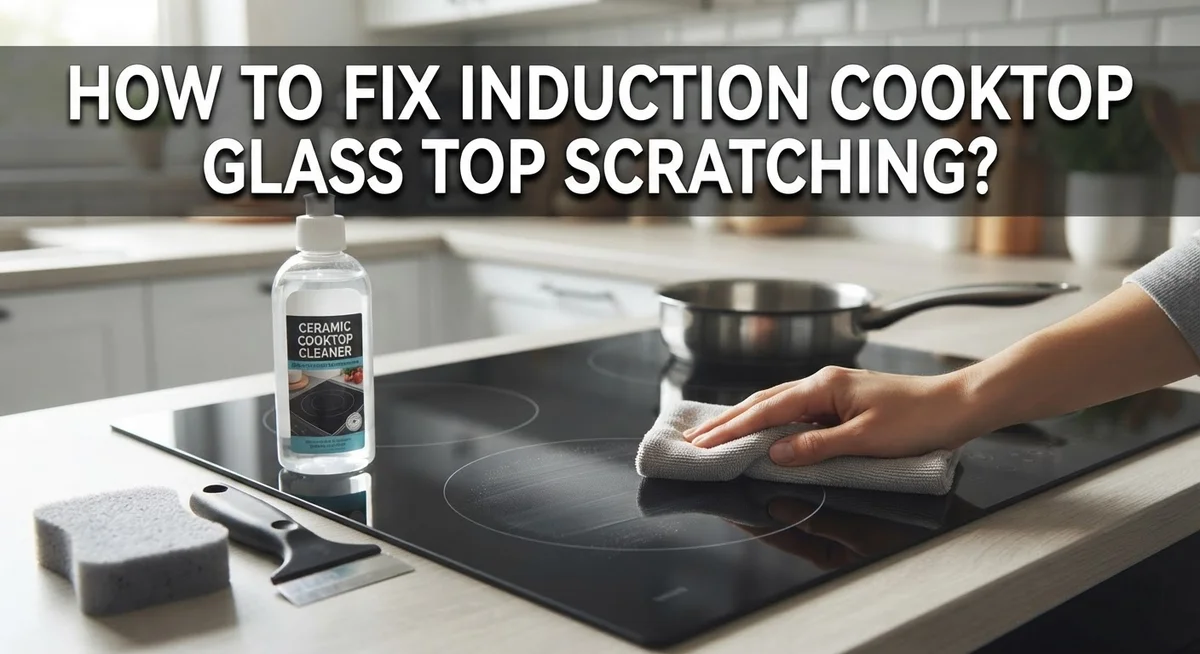
Apply a small amount of glass cooktop cleaner directly onto the scratched area. Use circular motions with a soft cloth. Work gently without pressing hard. The goal is to fill the scratch slightly, not to sand it away.
For light scratches, the cleaner often contains mild abrasives that smooth the edges. These products work best on surface level marks. Rub for about one minute, then check your progress.
If the scratch remains visible, apply a glass polishing cream made for cooktops. Follow the same circular motion technique. Let it sit for two to three minutes. This waiting time allows the product to penetrate the scratch.
Wipe away the excess with a clean, damp cloth. Use straight motions this time to avoid re scratching the area. Dry the surface completely with a lint free cloth.
For extra stubborn scratches, repeat the polishing step once more. Most light scratches disappear after two applications.
Test the cooktop by running your finger across the repaired area. The scratch should feel smoother now. If you still feel roughness, one more application usually does the trick.
Turn on your cooktop briefly to ensure it works properly. The glass should look clearer and the scratches less noticeable. Your cooktop is now ready for regular use again.
Cleaning and Polishing Techniques for a Smoother Surface
Once you’ve applied a glass polishing cream to your scratched cooktop, the next step focuses on maintaining that smooth finish. Polishing requires patience and the right technique to avoid creating new damage while fixing old scratches.
Start by using circular motions when applying any polishing product. Move your cloth in small circles directly over the scratch for about one to two minutes. This gentle motion helps the polishing agent work into the glass without creating additional marks.
Never use excessive pressure when polishing. Let the product do the work instead of forcing results. Heavy-handed scrubbing can actually deepen scratches or spread damage across a larger area of your cooktop surface.
After polishing, allow the product to sit on the glass for a few minutes. This waiting period lets the active ingredients penetrate and smooth the scratch edges more effectively. Check your product instructions for the exact timing, as different formulas vary.
Buff the area with a fresh microfiber cloth using gentle, straight strokes. Move from the center of the scratch outward to push any residue away. This prevents the polishing cream from drying unevenly and leaving streaks.
For stubborn scratches, you may need to repeat this process two or three times over several days. Space out your polishing sessions to avoid overworking the glass. Multiple gentle applications work better than one aggressive treatment.
Test your results carefully by running your fingernail across the area once it dries completely. If the scratch still catches your nail, it likely needs another polishing session. Some scratches require patience and multiple treatments before they fade significantly.
Between polishing sessions, keep your cooktop clean with regular maintenance. This prevents dust and debris from settling into the scratch and making it more visible. A smooth, clean surface shows your polishing progress more clearly.
Tips to Prevent Future Scratches
Preventing scratches on your induction cooktop glass top is far easier than fixing them. Daily care habits make a huge difference in keeping your surface smooth and scratch-free for years to come.
Always use soft cookware on your cooktop. Hard-bottomed pots and pans create scratches when you slide them across the glass. Choose cookware with smooth, flat bottoms instead. Lift your pans rather than dragging them. This simple habit prevents most scratches from occurring in the first place.
Keep your cooktop clean after every use. Food debris and mineral deposits can scratch the glass when you wipe the surface. Wipe spills immediately with a damp microfiber cloth. Let the cooktop cool first to avoid burns or thermal shock to the glass.
Use only soft cloths for cleaning. Rough sponges, steel wool, and abrasive scrubbers damage the glass quickly. Microfiber cloths work best because they clean effectively without scratching. Paper towels can also work in a pinch, though they’re less durable.
Avoid placing heavy objects directly on the cooktop surface. Dropped utensils, cookware lids, and heavy pans all create impact scratches. Store items safely away from the cooktop area.
Use cooktop-specific cleaning products designed to protect glass surfaces. These products clean without harsh abrasives that scratch over time. Regular cleaning with the right products keeps your glass looking new.
Create a routine that includes weekly deep cleaning. Gently wipe the entire surface with a glass cleaner made for cooktops. This removes buildup that can cause scratches when you cook.
Teach everyone in your household proper cooktop care. Accidents happen when people don’t know the right techniques. Share these prevention tips with family members who use the cooktop.
Temperature changes can stress the glass. Avoid pouring cold water on a hot cooktop. Let the surface cool gradually to prevent thermal cracking and stress marks that look like scratches.
Common Mistakes That Make Scratches Worse
Many people accidentally make their scratches worse by using the wrong cleaning methods. Understanding these common mistakes helps you avoid further damage to your cooktop surface.
Using abrasive scrubbers is the biggest culprit. Steel wool, scouring pads, and rough brushes create deep gouges instead of removing scratches. These materials are far too harsh for glass cooktops. Stick with soft microfiber cloths only.
Applying too much pressure during cleaning damages the glass further. People often think harder scrubbing will fix scratches faster. This approach backfires completely. Light, gentle motions work better than aggressive rubbing.
Using the wrong cleaning products ruins your cooktop’s appearance. All purpose cleaners, vinegar solutions, and harsh chemical sprays leave streaks and can degrade the glass coating. Always choose products specifically made for glass cooktops.
Cleaning while the cooktop is still hot creates additional stress on the glass. Temperature changes cause the material to expand and contract. Wait until the surface cools completely before cleaning. This prevents thermal shock that deepens existing scratches.
Dragging cookware across the surface during cooking introduces new scratches constantly. Even small pots can scratch the glass when moved carelessly. Lift cookware instead of sliding it. This simple habit prevents most new damage.
Ignoring small scratches allows them to spread over time. Dirt and debris settle into tiny cracks and make them more visible. Address scratches early before they become major problems.
Mixing different cleaning products creates chemical reactions that damage glass. Never combine vinegar with bleach based cleaners or other substances. Use one product at a time and rinse thoroughly between applications.
Storing items directly on the cooktop surface introduces scratches from contact. Pots, pans, and utensils should be kept in cabinets. Keep your cooktop clear when not in use.
Understanding these mistakes helps you protect your investment. Your cooktop stays looking new when you avoid these common errors and use proper care techniques consistently.
Troubleshooting: When Scratches Affect Cooktop Performance
Scratches on your induction cooktop glass can affect how well your cooktop performs. Understanding when this happens helps you take action quickly.
Minor surface scratches usually don’t impact performance. These shallow marks sit only on the top layer of glass. Your cooktop continues heating food normally. However, you may notice cooking zones heat unevenly if scratches become deep.
Deep scratches create problems. They can trap heat in certain areas. Food may cook faster in some spots and slower in others. The glass itself weakens when scratches go too deep. Over time, this structural damage spreads across the surface.
Watch for these warning signs that scratches affect function: Your cooktop takes longer to heat up than before. Certain cooking zones respond slowly to temperature adjustments. You notice visible cracks extending from scratched areas. The glass feels rough when you run your hand across it.
Temperature control becomes difficult with severe scratching. The heating elements sit beneath the glass surface. When scratches accumulate, they disrupt the connection between your cookware and the heating coils. This means your pots and pans don’t receive consistent heat.
Check your cooktop regularly for scratch progression. Use a flashlight to examine the glass closely. Look for cracks that branch out from main scratch lines. These indicate the glass is compromised structurally.
If scratches affect performance, you have options. Shallow scratches may improve with proper polishing techniques. Deep scratches that impact heating require professional assessment. Some damage is irreversible and needs glass replacement.
Stop using your cooktop if you see cracks spreading rapidly. Continued use risks further damage. Contact a professional technician for evaluation. They determine whether polishing helps or replacement is necessary.
Regular maintenance prevents this situation. Proper cleaning and careful cookware selection keep your glass intact. Address small scratches immediately before they worsen and affect cooking results.
Final Thoughts
Your induction cooktop can serve you well for many years. Small scratches are usually just cosmetic issues.
They don’t need to stop you from cooking your favorite meals. With the right care, you can keep your cooktop looking great.
The key is catching problems early. Check your glass surface often for new marks or changes.
Address small scratches right away with proper cleaning methods. This stops them from getting worse over time.
Prevention works better than repair in almost every case. Simple habits protect your cooktop for the long run.
Use soft cookware and gentle cleaning tools every time. These small changes make a huge difference.
Deep scratches sometimes need professional attention. Don’t ignore warning signs like uneven heating or cracks.
Your safety matters more than saving money on repairs. A damaged cooktop can pose real risks in your kitchen.
Take action quickly if you notice serious damage. Waiting only makes problems harder to fix later.
Remember that glass cooktops need special care compared to other surfaces. They are more delicate than they appear.
Treat your cooktop with respect during cooking and cleaning. This simple mindset shift protects your investment.
Building good habits takes time but pays off. Your cooktop will thank you with better performance.
Many scratches are simply part of normal use. Don’t panic over every small mark you see.
Focus on prevention first, then address issues as they arise. This balanced approach keeps stress low.
Regular maintenance is your best tool against damage. A few minutes each day protects your cooktop for years.
Stay informed about proper care techniques for your specific model. Different cooktops may have slightly different needs.
With consistent effort, you can enjoy a scratch-free cooking surface for a long time. Your kitchen deserves that level of care.
Frequently Asked Questions
Can I use vinegar and baking soda on my induction cooktop?
Vinegar and baking soda work well for light cleaning. Mix baking soda with a little water to form a paste. Apply it gently to the glass surface. Let it sit for a few minutes, then wipe with a soft cloth.
Vinegar helps cut through grease. Spray it on after you remove the baking soda paste. Wipe everything clean with a damp cloth.
However, avoid using these together as a fizzing mixture. The chemical reaction can scratch the glass if you scrub too hard. Always use gentle, circular motions when cleaning.
Will scratches on my cooktop spread over time?
Minor surface scratches stay mostly the same. They sit only on the top layer and don’t usually get worse by themselves.
Deep scratches can spread if you ignore them. Temperature changes and pressure from cooking can make them expand. Cracks especially need attention quickly because they grow faster.
Check your cooktop weekly for changes. If scratches look deeper or longer than before, stop using the cooktop and get professional help.
What’s the best way to prevent new scratches?
Use flat bottomed cookware only. Pots and pans with bumpy or uneven bottoms create scratches easily.
Lift your cookware straight up instead of dragging it. Sliding causes most scratches during cooking.
Clean with soft cloths and gentle tools. Never use steel wool or rough sponges. Wipe spills immediately when the cooktop cools down completely.
Can scratches affect how my cooktop heats food?
Surface scratches don’t usually impact heating. Your food cooks normally because the scratch sits only on top.
Deep scratches sometimes cause problems. Your cooktop might heat slower or unevenly. Temperature control becomes harder with severe damage.
If you notice heating changes, have a professional inspect your cooktop right away.

Hi, I’m Archie Flynn, the founder and writer behind RapidResizerHub! 👋 I’m a passionate tech enthusiast who loves exploring the latest gadgets, smart devices, and trending electronics on Amazon. Through my honest, hands-on reviews and detailed buying guides, I help readers make smarter, well-informed shopping decisions.