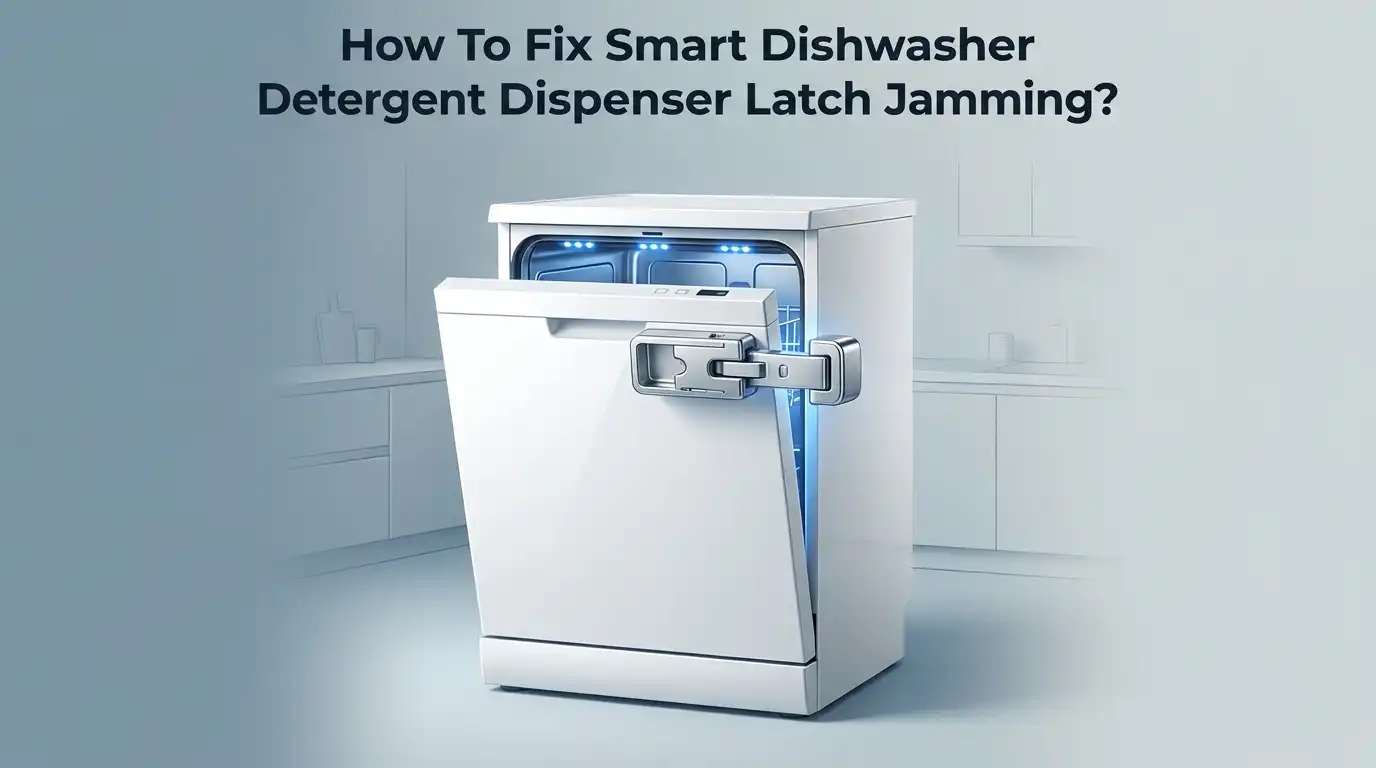
How To Fix Smart Dishwasher Detergent Dispenser Latch Jamming?
A jammed detergent dispenser can turn dishwashing into a real headache. You add the soap, close the latch, and start a cycle. But later you open the door to find dry, unused detergent still sitting there.
This problem is common in smart dishwashers with electronic latch systems. These latches rely on small sensors and motors. When they jam, the whole cleaning process suffers.
Detergent buildup is often the main culprit behind a stuck latch. Old soap residue hardens over time. This hardened grime blocks the latch from closing or opening properly.
Other causes include misaligned parts, broken springs, and sensor glitches. Sometimes the fix is simple. Other times, it needs a closer look at the mechanism.
In a Nutshell
- Clean the latch area first. Wipe away soap scum and food residue with a damp cloth. This simple step solves most jamming problems.
- Check for physical blockages. Look for broken plastic bits or worn springs near the latch. Small debris can stop the mechanism from closing properly.
- Test the electronic sensor. Smart dishwashers rely on sensors to confirm the latch is secure. A loose wire or dirty sensor often triggers false error messages.
- Realign the dispenser door. Sometimes the latch simply sits at the wrong angle. Gently adjust it until it clicks into place smoothly.
- Restart the smart system. Power cycling your dishwasher can reset minor electronic glitches. This often clears up communication issues between the latch and control panel.
- Know when to call a technician. If cleaning and resetting do not work, the issue might be a deeper mechanical fault. Professional help ensures your dishwasher runs safely again.
Understanding How the Detergent Dispenser Latch Works
Your smart dishwasher’s detergent dispenser latch is a small but critical component. It holds the detergent cup closed until the right moment in the wash cycle. When you start the dishwasher, an electronic signal tells the latch to release. The detergent then drops into the wash chamber at the optimal time.
The latch mechanism works in two parts. First, there is a physical latch arm made of plastic or metal. This arm hooks into a catch point on the dispenser door. Second, an electric solenoid or motor powers the release action. The solenoid receives signals from your dishwasher’s control board.
Smart dishwashers add sensor technology to this basic design. Sensors detect whether the latch is fully closed and locked. They also confirm when the latch has opened successfully. If a sensor fails, your dishwasher’s computer cannot verify the latch position. This confusion can cause the system to jam or refuse to open.
The timing of the latch release matters greatly. Most dishwashers release detergent during the main wash phase. Some models release it twice: once for pre wash and once for the main cycle. The control board coordinates this timing based on your cycle selection.
Understanding this system helps you diagnose problems. A jammed latch might stem from a stuck physical arm, a faulty solenoid, or a broken sensor. It could also result from misalignment between the latch and its catch point. Each issue requires a different fix approach.
The latch also interacts with your dishwasher’s water and heat. Mineral deposits and soap residue accumulate around the mechanism. This buildup can prevent smooth movement. Regular cleaning prevents many latch problems before they start.
Common Causes of Latch Jamming in Smart Dishwashers
A jammed detergent dispenser latch happens for several reasons. Understanding these causes helps you fix the problem faster and prevent it from happening again.
Detergent residue builds up over time inside the dispenser compartment. Hard water deposits, soap scum, and powder particles stick to the latch mechanism. This sticky coating prevents the latch from moving freely. The buildup also interferes with the sensor that tells your dishwasher when to release detergent.
Misalignment occurs when the dispenser door sits at the wrong angle. The latch may bend slightly if you close the door too hard or if something blocks it. Even a small shift prevents the latch from clicking into place properly.
Broken springs lose their tension over time. Smart dishwashers use springs to keep the latch in position and help it release at the right moment. A worn or damaged spring cannot hold the latch securely.
Sensor malfunctions are common in electronic models. The sensor detects when the wash cycle reaches the detergent release point. If the sensor fails, the latch may not open on schedule or may jam from repeated failed attempts to release.
Foreign objects sometimes fall into the dispenser area. Small food particles, plastic bits, or broken parts block the latch mechanism.
Water damage can corrode the latch components and cause rust. This is especially true if water leaks into areas where it should not reach.
Age and wear affect all mechanical parts. After years of opening and closing, metal components weaken and plastic parts become brittle.
Identifying which cause applies to your dishwasher makes the repair process straightforward.
Tools and Safety Precautions Before You Begin
Before you start fixing your smart dishwasher’s detergent dispenser latch, gather the right tools and take basic safety steps. This preparation prevents accidents and makes the repair smoother.
Gather these essential tools first. You will need a flashlight to see inside the dispenser compartment clearly. A small flathead screwdriver helps you gently pry open covers or release clips without causing damage. Needle nose pliers let you remove small objects or bend metal components back into place. A soft cloth or old toothbrush cleans away debris and buildup. Wear safety glasses to protect your eyes from loose particles or springs that might pop out suddenly.
Turn off power to your dishwasher before starting any work. Unplug the unit from the electrical outlet or switch off the circuit breaker. Wait at least five minutes for the system to fully discharge. This step is critical because smart dishwashers contain electrical components that can cause injury if touched while powered on.
Check the user manual for your specific model. Different dishwashers have different dispenser designs. Your manual shows exactly where the latch sits and how to access it safely. Keep the manual nearby during your repair work.
Prepare your workspace. Place a towel under the dispenser area to catch water or small parts. Have a container ready for screws or components you remove. Good lighting helps you see what you are doing and spot problems quickly.
Never force any stuck parts. Apply gentle pressure instead. Forcing the latch can break plastic components and create bigger problems. If something feels stuck, stop and reassess before continuing.
Step-by-Step Guide to Fixing a Jammed Latch
Start by opening your dishwasher door completely. You want full access to the detergent dispenser compartment located on the inside of the door.
Look closely at the latch mechanism. Use your flashlight to inspect whether debris, hardened detergent, or mineral deposits are blocking the moving parts. These buildups are the most common jam causes.
Gently attempt to move the latch by hand. Push it in the direction it normally travels during a wash cycle. Do not force it if resistance is strong, as this could break the spring inside.
If the latch moves slightly but feels stuck, try cleaning the area around it. Use a soft cloth slightly dampened with white vinegar to dissolve mineral deposits. Wipe away any visible residue carefully.
Check the dispenser door alignment next. Close and open it several times to see if it sits evenly. A misaligned door can prevent the latch from functioning smoothly.
Inspect the spring behind the latch. Look for visible corrosion, rust, or damage. A weakened spring may not retract properly after release.
Test the latch movement again after cleaning. It should move freely without grinding sounds or resistance.
If the latch still jams after these steps, the internal spring may need replacement. The spring loses tension over time and cannot pull the latch back into place.
Listen for clicking sounds when you manually operate the latch. Clicking indicates the mechanism still has some function. Silence or grinding suggests more serious internal damage.
Take photos of the dispenser area before and during your inspection. These images help you remember the original setup if you need to reassemble components later.
Cleaning and Removing Detergent Residue Buildup
Detergent residue buildup is one of the most common causes of a jammed dispenser latch. Over time, powder or liquid detergent accumulates inside the compartment and hardens into a sticky paste.
Start by removing loose debris with a dry cloth. Wipe away any visible powder or dried detergent chunks from the dispenser walls and latch area. A flashlight helps you see into tight corners where residue hides.
Next, use warm water to soften stubborn buildup. Dampen a soft brush or old toothbrush with warm water. Gently scrub the interior surfaces of the dispenser compartment, paying special attention to corners and crevices where detergent collects.
For hardened deposits, let warm water soak in the area for 10 to 15 minutes. This softens the residue and makes it easier to remove. Avoid using harsh chemicals or abrasive scrubbers, as these can damage plastic components.
After scrubbing, wipe the compartment dry with a clean cloth. Make sure no moisture remains, as water can cause rust on metal springs and corrode electronic sensors.
Check the latch mechanism itself for residue coating. Gently clean around the latch pivot points with a damp cloth. Move the latch slowly back and forth as you clean to work out trapped particles.
Finally, run an empty wash cycle with hot water. This flushes out any remaining detergent dust and helps dry internal components. Allow the dishwasher to cool completely before testing the latch again.
Regular cleaning prevents future jamming. Clean your dispenser compartment every month to keep residue from building up and causing problems.
Checking Smart Sensors and Electronic Components
Smart dishwashers use electronic sensors to detect when the detergent dispenser latch opens and closes. These sensors tell your dishwasher when to release detergent during the wash cycle. If sensors malfunction, the latch may jam because the dishwasher cannot communicate properly with the dispenser mechanism.
Start by locating the sensor near your dispenser latch. Check your user manual for the exact position. Most sensors sit on the side or back of the dispenser compartment.
Use your flashlight to inspect the sensor for dirt, mineral deposits, or detergent residue. Even small amounts of buildup can block the sensor’s signal. Gently wipe the sensor lens with a soft, dry cloth to remove any coating.
Next, examine the wiring connected to the sensor. Look for loose connections, bent pins, or visible damage. Wiggle the connector gently to ensure it sits firmly in place. A loose connection can cause false signals that jam the latch.
Test your dishwasher’s control panel to see if error codes appear. Many smart dishwashers display codes when sensors fail. Write down any codes you see and check your manual for their meanings.
Run a diagnostic cycle if your model offers this feature. Your dishwasher’s control panel may have a test mode that checks all electronic components. This helps you identify whether the sensor itself is faulty or if the problem lies elsewhere.
If the sensor appears clean and connections are tight, the issue may be with the electronic control board. This component processes sensor signals and controls the latch motor. A faulty control board requires professional service or replacement. Contact your dishwasher manufacturer’s support team for guidance on repair options.
Preventive Maintenance Tips to Avoid Future Jams
Regular maintenance is the best way to keep your dishwasher’s detergent dispenser working smoothly. Small actions now prevent big problems later.
Clean your dispenser weekly. After each wash cycle, wipe out the dispenser compartment with a dry cloth. This stops detergent powder and liquid from building up over time. Pay special attention to the corners where residue hides.
Use soft water or filtered water in your dishwasher when possible. Hard water leaves mineral deposits that accumulate on the latch and surrounding parts. These deposits make the latch sticky and harder to open. If you have hard water, consider using a water softener in your dishwasher.
Load your dishes correctly to avoid splashing. Dishes positioned too high can cause water to spray directly into the dispenser compartment during the cycle. This extra moisture speeds up residue buildup and corrosion.
Check the latch monthly by opening and closing it gently by hand. Feel for any grinding sounds or resistance. Catch small problems before they become serious jams.
Use the right amount of detergent for your water hardness and load size. Excess detergent leaves more residue behind. Follow your dishwasher’s guidelines for proper dosing.
Run an empty hot water cycle once per month. This flushes out hidden buildup inside the dispenser and pipes. It keeps everything fresh and clean.
Store detergent in a cool, dry place away from moisture. Clumpy or hardened detergent causes more residue when it dissolves unevenly.
Inspect the spring and hinges every few months. Look for rust or corrosion forming on metal parts. Wipe these areas dry immediately after you spot moisture.
These simple steps keep your dispenser latch moving freely and your dishwasher running reliably for years.
Troubleshooting Persistent or Recurring Latch Issues
When your smart dishwasher’s detergent dispenser latch keeps jamming even after cleaning, you need to dig deeper into the problem. Recurring issues usually point to underlying mechanical wear or alignment problems rather than simple dirt buildup.
Start by examining the latch arm itself for visible cracks or bending. Even small damage can cause the latch to catch repeatedly. Gently press the latch down by hand several times to feel if it catches at a specific point. This tells you where the obstruction occurs.
Next, inspect the latch housing for warping. Heat and moisture inside your dishwasher can warp plastic components over time. Look for gaps between the latch and its housing. If you spot gaps, the latch may need repositioning or the housing may need adjustment.
Check the spring mechanism behind the latch. A weakened or damaged spring causes the latch to fail repeatedly. If the spring doesn’t snap back quickly, it’s likely worn out and may need replacement.
Examine the catch point where the latch closes. Mineral deposits can form in this area even after cleaning. Use a small brush or old toothbrush to scrub this spot thoroughly with vinegar. Let it soak for five minutes first.
Test the door seal around the dispenser area. A loose door seal allows water to spray directly into the dispenser compartment. This excess moisture causes ongoing jamming problems.
If jamming persists after these checks, the issue likely involves internal components. Document your findings with photos and note exactly when the jam occurs. This information helps service technicians diagnose the problem faster. Consider contacting your dishwasher manufacturer’s support team for guidance on next steps or potential repairs.
Final Thoughts
A jammed detergent dispenser latch feels frustrating, but you now have the tools to fix it. Most jamming problems come from simple causes like residue buildup or debris. Small fixes often solve big problems.
Start with the easiest solutions first. Check for visible blockages before assuming your dishwasher has electronic issues. Many latch problems disappear after a good cleaning session.
Your smart dishwasher relies on precise mechanical and electronic parts working together. When one part struggles, the whole system feels the effect. Patience helps you find the real problem instead of guessing.
Remember that consistency matters more than perfection. A quick check now and then keeps your dispenser working well for years. Small habits protect your appliance from bigger breakdowns later.
If you tried every step and the latch still jams, do not feel discouraged. Some issues need a trained technician who understands your specific model. There is no shame in asking for expert help when a problem goes beyond basic fixes.
Your dishwasher represents a real investment in your home. Taking care of it protects that investment and saves you money over time. A well maintained dispenser means better cleaning results for every wash cycle.
Keep this guide handy for future reference. Latch problems can return even after you fix them once. Having a clear plan makes any repeat issue easier to handle.
Trust your own observations as you work through each step. You know your dishwasher better than anyone else. Your careful attention now leads to smoother performance and fewer surprises later.
A little effort today saves you real frustration tomorrow.
Frequently Asked Questions
Why does my detergent dispenser latch jam right after I clean it?
Sometimes cleaning alone does not solve the problem. The latch may jam again if the underlying mechanical issue remains unfixed. After cleaning, check if the latch arm moves freely by hand. If it still feels stiff, the spring mechanism behind it may need adjustment or replacement. Also inspect the catch point where the latch closes. Debris can hide in small crevices even after wiping.
Can a jammed latch damage my dishwasher’s wash cycle?
Yes, it can affect performance. When the dispenser latch does not open properly, detergent stays trapped inside. Your dishes may not get cleaned well because the soap never releases at the right time. The electronic control board may also send error signals if sensors detect the latch did not open.
How do I know if the problem is mechanical or electronic?
Test the latch manually first. Open your dishwasher door and gently push the latch by hand. If it moves smoothly, the mechanical part works fine. The issue then points to the electronic release system. If the latch feels stuck or stiff even with hand pressure, you have a mechanical jam that needs attention.
Should I try fixing the latch myself or call a professional?
Start with basic cleaning and manual checks yourself. These steps take little time and often work. If the latch still jams after you inspect the spring, housing, and catch point, professional help becomes necessary. Internal electronic components require special tools and expertise.

Hi, I’m Archie Flynn, the founder and writer behind RapidResizerHub! 👋 I’m a passionate tech enthusiast who loves exploring the latest gadgets, smart devices, and trending electronics on Amazon. Through my honest, hands-on reviews and detailed buying guides, I help readers make smarter, well-informed shopping decisions.