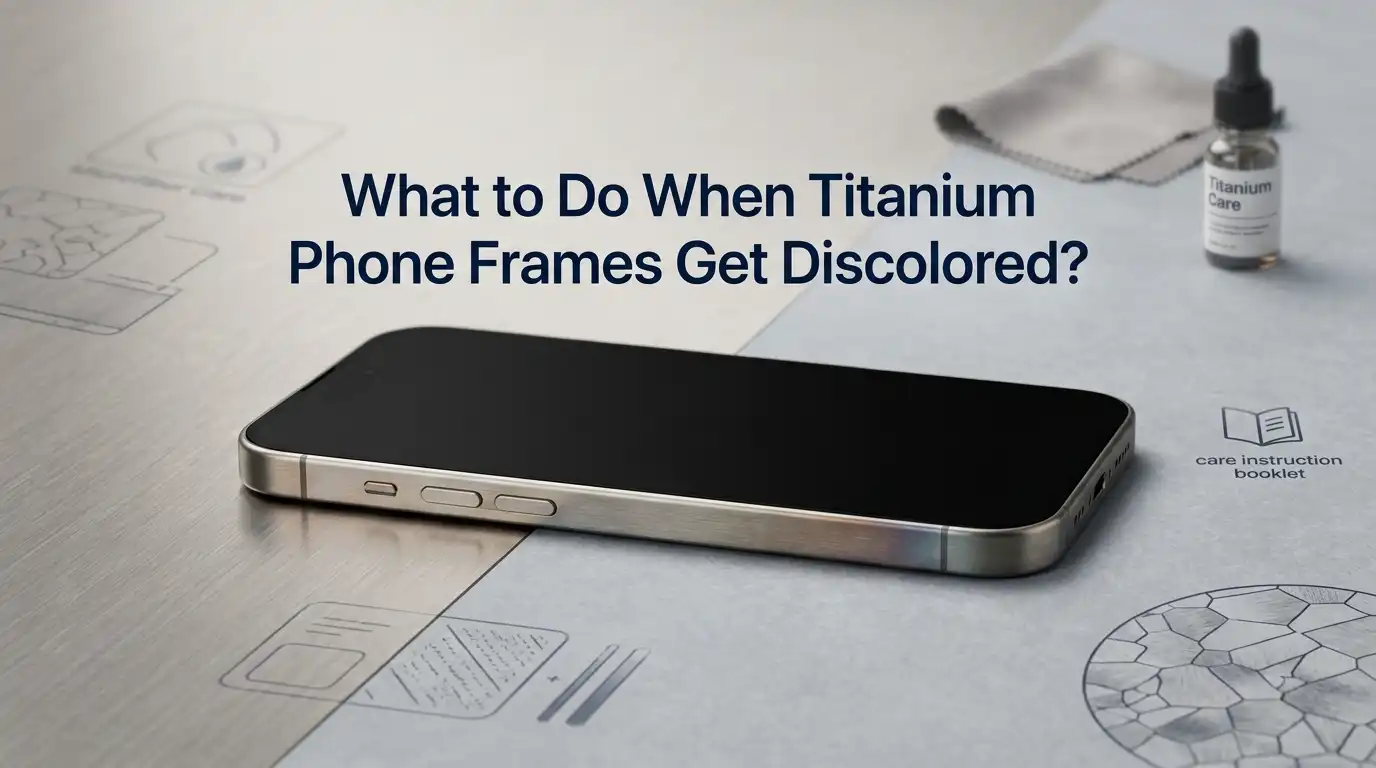
What to Do When Titanium Phone Frames Get Discolored?
Your shiny titanium phone frame looked stunning the day you unboxed it. Now it shows yellow patches, dark smudges, or strange rainbow streaks along the edges. You are not alone in this.
Owners of the iPhone 15 Pro, iPhone 16 Pro, iPhone 17 Pro Max, Samsung Galaxy S24 Ultra, and other titanium flagships report the same issue.
The good news is most of this discoloration is fixable at home. This guide walks you through every cause, every cleaning method, and every protection tip so your phone looks brand new again.
In a Nutshell
- Most discoloration is just oil residue. The skin oils, sunscreen, and lotions on your fingers stick to the titanium and temporarily change its color. A simple wipe usually brings it back.
- Real oxidation is rare but possible. Lighter shades like Natural Titanium show light surface oxidation faster than darker shades. This needs a slightly stronger cleaning method.
- PVD coating can wear off. Many titanium frames use a Physical Vapor Deposition layer for color. Harsh chemicals or rough scrubbing can damage this thin coating permanently.
- Microfiber cloth and distilled water solve 80% of cases. You rarely need anything stronger than that. Avoid alcohol, bleach, and abrasive powders unless absolutely needed.
- A case prevents future damage. Keeping your phone in a clean, breathable case stops fingerprints, sweat, and chemicals from reaching the frame.
- Apple and Samsung do not consider mild discoloration a defect. So warranty claims usually fail. Your best bet is home cleaning and prevention.
Why Titanium Phone Frames Discolor in the First Place
Titanium itself does not rust like steel. But the surface still reacts with the oils, salts, and acids on your skin. Apple confirmed that the oil from your fingers can temporarily alter the color of the iPhone 15 Pro band. The same applies to newer models and the Galaxy S24 Ultra.
Most flagship phones do not use raw titanium. They use a Grade 5 titanium alloy with a thin PVD coating on top. This coating gives the phone its color. When sweat, sunscreen, or hand cream sits on this coating for hours, it leaves a stain. In some cases, it can even react chemically with the surface.
Heat from your pocket and humidity from your hand make the problem worse. Lighter colors like Natural Titanium show stains faster because there is less pigment to hide them.
Step 1: Identify the Type of Discoloration You Have
Before cleaning, figure out what you are dealing with. The fix changes based on the cause. Look at your frame under bright daylight or a desk lamp.
Yellow or brown patches usually mean oil and sweat buildup. These wipe off easily. Dark gray or black smudges are often dirt and dust mixed with oil. Rainbow or oily streaks are surface oxidation, common on lighter titanium. White haze can be sunscreen or lotion residue. Faded or worn spots mean the PVD coating itself is damaged, which is the hardest type to fix.
If the color comes off slightly when you rub with a dry cloth, it is just residue. If the metal underneath looks dull or scratched, the coating layer has worn down. Knowing the difference saves you time and protects your phone from the wrong cleaning method.
Step 2: Start With the Safest Cleaning Method
Always begin with the gentlest option. A soft, lint free microfiber cloth is your best friend here. This is the same kind you use for eyeglasses or camera lenses.
Power off your phone first. Unplug any cables. Take the case off. Now gently rub the frame in small circles. Most light fingerprints disappear in seconds. If the cloth is dry and the stain stays, dampen it lightly with distilled water. Tap water can leave mineral spots on the frame.
Pros: Safe for any titanium finish. No risk to the PVD coating. Costs almost nothing. Cons: Will not remove deep stains, sunscreen, or oxidation. You may need a stronger method for those.
Repeat this process two or three times. Many users find this is all they ever need. Apple itself recommends only this method in its official cleaning guide.
Step 3: Use Mild Soap and Water for Stubborn Stains
If a damp cloth does not work, move up one level. Mix a tiny drop of dish soap with about half a cup of distilled water. Use a soap that has no bleach, no citrus, and no abrasive particles. Plain Dawn or any mild liquid soap works well.
Dip a corner of your microfiber cloth into the solution. Wring it out so it is barely damp, not dripping. Wipe the frame in straight lines along the length of the phone. Do not let water near the speakers, ports, or camera ring.
After wiping, take a second clean cloth dampened only with distilled water. Wipe the frame again to remove any soap. Then dry with a third clean cloth.
Pros: Removes most sunscreen, lotion, and food stains. Still safe for PVD coatings. Cons: Risk of water entering ports if you use too much liquid. Takes more time and three cloths.
Step 4: Try a Specialized Screen or Lens Cleaner
When soap and water fail, the next step is a proper electronics cleaner. Look for products labeled safe for anti reflective coatings or eyeglass lenses. These are pH balanced and will not strip the PVD layer.
Spray the cleaner onto the cloth, never directly onto the phone. A small amount goes a long way. Wipe the frame gently. These cleaners often dissolve sunscreen and skin oil better than soap because they contain mild surfactants.
Some users on MacRumors forums report good results with Whoosh screen cleaner and similar lens cleaning sprays. Always patch test on a small hidden area first, like the bottom edge near the lightning or USB C port.
Pros: Fast and effective. Leaves no streaks. Safe for screens too. Cons: Costs more than soap. Some sprays contain alcohol that may slowly fade colored coatings if used daily.
Step 5: Remove Sunscreen and Lotion Residue Carefully
Sunscreen is one of the worst enemies of titanium phones. The chemicals in chemical sunscreens, especially avobenzone and octocrylene, can react with PVD coatings and leave permanent marks if left on too long.
If you spot fresh sunscreen on the frame, wipe it off immediately with a damp microfiber cloth. The faster you act, the less damage it does. For dried sunscreen, use the mild soap method described earlier. You may need two or three rounds.
Avoid using alcohol wipes for sunscreen. Alcohol can spread the chemicals and make the stain worse. Never scrub hard. Hard scrubbing pushes the chemicals deeper into the coating.
Pros of quick action: Stops permanent staining. Cons of waiting: Once sunscreen reacts with the coating, no home method can fully restore the original look. You may need a professional polish or accept the change.
Step 6: Handle Oxidation on Lighter Titanium Shades
Apple has admitted that minor surface oxidation can happen on the iPhone 17 Pro Max, especially in Natural Titanium and lighter colors. Samsung Galaxy S24 Ultra owners report similar issues with the Titanium Gray and Titanium Yellow versions.
For light oxidation, the soap and water method works in most cases. For slightly deeper oxidation, a tiny amount of non gel toothpaste on a damp microfiber cloth can help. Rub very gently in small circles for about 30 seconds. Wipe clean with a damp cloth, then dry.
Toothpaste contains very fine abrasives that polish the surface. Use only white paste, never gel or whitening formulas with peroxide. Test on a hidden corner first.
Pros: Toothpaste is cheap and removes light oxidation. Cons: Risk of dulling the finish if you rub too hard. Can leave small scratches on glossy PVD coatings.
Step 7: Deal With Scratches That Look Like Discoloration
Sometimes what looks like a stain is actually a fine scratch catching the light. Run your fingernail across the area. If you feel a ridge, it is a scratch, not a stain.
Light scratches on brushed titanium can sometimes be reduced by rubbing along the grain with a soft cloth and a tiny bit of metal polish meant for jewelry. Polished titanium responds to very fine polishing compounds. Always rub in the direction of the original finish lines.
For PVD coated frames in colors like Blue Titanium or Black Titanium, polishing will remove the color entirely. One Reddit user polished their iPhone Air and ended up with a raw titanium look. They liked it, but it cannot be reversed.
Pros: Polishing hides shallow scratches. Cons: Can permanently strip color from PVD finishes. Best left alone unless the scratch really bothers you.
Step 8: Avoid These Cleaning Mistakes That Make It Worse
Many people damage their phones by trying the wrong fix. Here is what to skip. Never use bleach, hydrogen peroxide, or chlorine based cleaners. These eat through PVD coatings within minutes.
Avoid acetone and nail polish remover. They strip color almost instantly. Skip baking soda paste. It is too abrasive for thin coatings. Do not use compressed air at close range as the cold blast can crack coatings on cold days.
Also avoid wipes labeled disinfecting unless they specifically say safe for electronics. Many contain quaternary ammonium compounds that slowly degrade phone finishes. Magic Erasers and melamine sponges work like fine sandpaper and will dull or scratch your frame.
If you are not sure about a product, do not use it. When in doubt, stick with distilled water and a microfiber cloth. The few extra wipes are worth the safety.
Step 9: When to Visit a Professional or Apple Store
Some discoloration is beyond home repair. If the PVD coating is peeling, flaking, or has clear bubbles, take the phone to an authorized service center. If the discoloration came with overheating or water exposure, get it checked for internal damage.
Apple and Samsung usually do not cover cosmetic discoloration under standard warranty. But if your phone is under AppleCare Plus or Samsung Care Plus, the support team may offer a discounted repair or replacement frame. Always ask politely and bring photos taken in good light.
Independent repair shops sometimes offer titanium polishing services for around 30 to 80 dollars. They cannot restore PVD color, only bring back a polished metal look.
Pros of professional help: Expert tools and finishes. Honest assessment of damage. Cons: Cost adds up. Color matched repair is often not possible for PVD frames.
Step 10: Protect Your Frame From Future Discoloration
Prevention is easier than cleaning. The simplest fix is a good case. A slim case with raised edges keeps your fingers off the frame most of the time. Look for cases made of TPU or polycarbonate with a soft inner lining.
Wash your hands before using your phone after applying sunscreen, hand cream, or hand sanitizer. Wait at least two minutes for these products to absorb. This one habit prevents most stains.
Wipe your phone every evening with a dry microfiber cloth. This stops daily oil from building into a stubborn stain. Keep the phone out of direct sunlight in hot cars. Heat speeds up the reaction between skin oils and the coating.
Pros of using a case: Almost eliminates discoloration. Adds drop protection. Cons: Hides the design you paid for. Some cases trap moisture if worn 24/7.
Step 11: Best Cases and Skins for Titanium Phones
If you want protection without hiding the titanium look, consider a clear case or a vinyl skin. Clear TPU cases keep the frame visible while blocking direct skin contact. Vinyl skins from brands like dbrand or Slickwraps wrap the frame in a thin film.
Skins are great because they peel off cleanly without leaving residue. They also come in matte, leather, and carbon textures. Skins protect against oil, sunscreen, and minor scratches but not drops.
For full protection, a folio or wallet case covers everything. The trade off is bulk and weight. Pick your style based on how often you drop your phone and how often your hands are oily.
Pros of skins: Thin, invisible from a distance, easy to remove. Cons: No drop protection. Need careful application to avoid bubbles.
Step 12: Routine Care Schedule for Long Lasting Shine
A simple routine keeps your titanium frame looking new for years. Set a small habit. Every night, wipe the phone with a dry microfiber cloth for 20 seconds. Once a week, do a damp wipe with distilled water. Once a month, do a full clean with mild soap and water.
Replace your microfiber cloth every two to three months. Old cloths collect dust that can scratch the frame. Wash cloths with plain water only, no fabric softener, as softeners leave residue.
Check the frame under bright light during your weekly clean. Catching a stain early means you remove it with water alone. Letting it sit for weeks may need stronger cleaners.
Pros of routine care: Phone stays beautiful and resale value stays high. Cons: Takes a few minutes each week. Easy to forget on busy days.
Frequently Asked Questions
Does titanium really rust or oxidize on phones?
Pure titanium does not rust. But the PVD coating on phone frames can show light surface oxidation, especially in lighter colors. Most of what looks like rust is actually skin oil residue that wipes off easily.
Can I use rubbing alcohol to clean my titanium phone frame?
Apple allows 70 percent isopropyl alcohol wipes occasionally, but daily use can fade colored PVD coatings. Use it only when soap and water fail, and always test on a small area first.
Will a magic eraser remove fingerprints from my titanium frame?
No. Magic erasers act like very fine sandpaper. They will dull the finish and may strip the PVD color. Stick with microfiber cloth and water instead.
Is titanium discoloration covered under warranty?
Usually not. Apple and Samsung consider mild discoloration a cosmetic issue. If the coating is peeling or flaking, you may have a warranty case. Bring clear photos and visit an authorized service center.
How often should I clean my titanium phone?
A quick dry wipe every night is enough for daily care. A deeper clean once a week with a slightly damp cloth keeps stains from setting in.
Does a case really prevent discoloration?
Yes. A case blocks most skin oil, sunscreen, and sweat from touching the frame. This is the single best prevention method available.
Can I restore the original color if the PVD coating wears off?
No home method can restore PVD color. A professional polish can give the frame a uniform raw titanium look, but the original color is gone for good. Prevention is the only real solution.

Hi, I’m Archie Flynn, the founder and writer behind RapidResizerHub! 👋 I’m a passionate tech enthusiast who loves exploring the latest gadgets, smart devices, and trending electronics on Amazon. Through my honest, hands-on reviews and detailed buying guides, I help readers make smarter, well-informed shopping decisions.