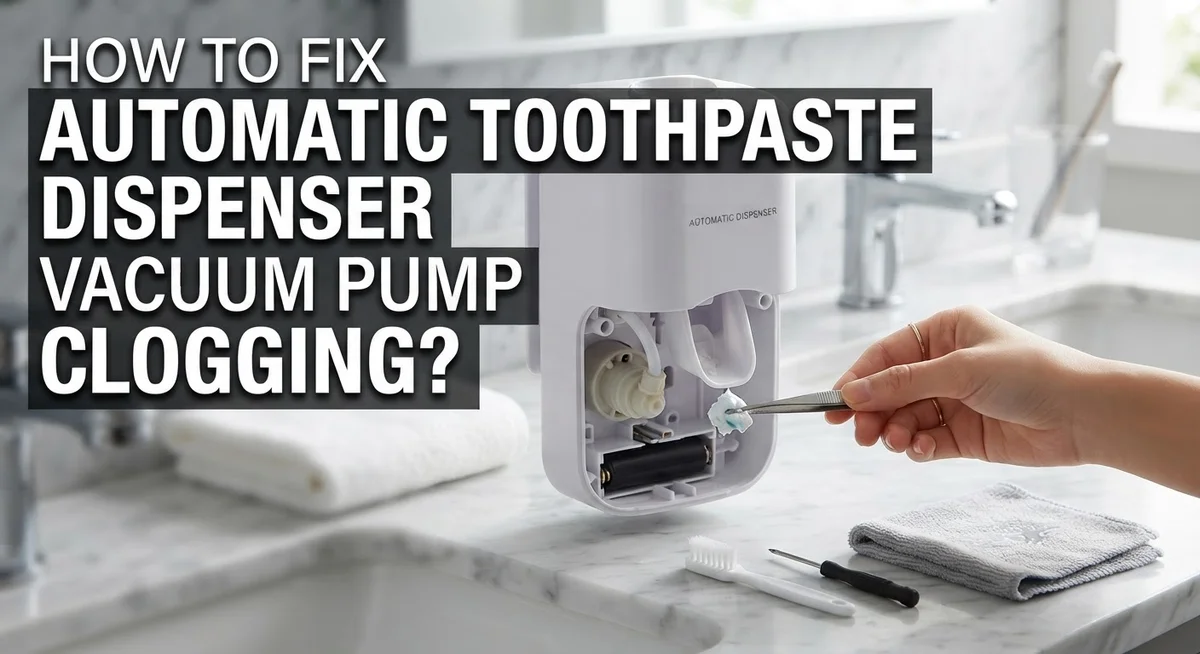
How To Fix Automatic Toothpaste Dispenser Vacuum Pump Clogging?
Your automatic toothpaste dispenser makes mornings easier. You press a button and clean paste comes out. But then one day, nothing happens.
This problem is common. Dried toothpaste often builds up inside the pump. It blocks the nozzle and stops the flow completely.
Thick or inconsistent toothpaste can also cause trouble. Some formulas are simply too heavy for the vacuum pump to push through smoothly.
In a Nutshell
- Clean the nozzle first. Dried toothpaste often blocks the tip. A magic eraser works well to wipe away buildup.
- Check the hinge area. Pry off the front cap gently and tilt it back. Use a toothpick to clear any debris stuck between the cap and hinge.
- Thin out thick toothpaste. Mix a small amount of mouthwash into the paste. This helps it flow smoothly through the pump.
- Wipe your dispenser daily. Regular cleaning stops residue from drying and clogging the mechanism again.
- Remove the lid for deep cleaning. Take it off and rinse it under water. This clears any hidden buildup inside.
- Avoid skipping maintenance. Neglecting daily care is the biggest reason pumps clog repeatedly.
Why Automatic Toothpaste Dispensers Clog
Automatic toothpaste dispensers clog because of how they work. The vacuum pump system pulls toothpaste from the tube and pushes it out through a small nozzle. When toothpaste dries inside this nozzle, it hardens and blocks the flow.
Dried toothpaste buildup is the main culprit. Every time you use the dispenser, a tiny bit of paste remains in the nozzle. Over days and weeks, these layers stack up and form a hard blockage. The pump can no longer force fresh toothpaste through the opening.
Toothpaste thickness also matters. Some brands make very thick paste that doesn’t flow easily through narrow pump channels. When you press the dispenser button, the pump struggles to move thick paste forward. This strain can cause the mechanism to jam or fail completely.
The hinge area between the nozzle cap and the dispenser body traps debris too. Toothpaste creeps into this gap during normal use. Once it dries there, it acts like glue and prevents the cap from moving smoothly.
Inconsistent maintenance speeds up clogging. If you never wipe your dispenser after brushing, moisture and dried paste accumulate faster. The pump works harder each time, increasing the risk of a complete blockage.
Environmental factors play a role as well. Bathroom humidity can soften dried toothpaste, making it stickier. This sticky residue clings to pump parts more aggressively than dry paste.
Understanding these causes helps you prevent future clogs. The vacuum pump system is clever, but it needs regular care. Simple daily habits stop most clogging problems before they start.
Signs Your Vacuum Pump Needs Unclogging
Your automatic toothpaste dispenser shows clear signs when the vacuum pump needs unclogging. Recognizing these signals helps you act before the problem gets worse.
Weak or no toothpaste flow is the most obvious sign. When you press the button, little to nothing comes out. The pump may make a clicking sound but dispense no paste. This happens because dried toothpaste blocks the internal pathway.
Sputtering or inconsistent dispensing indicates a partial clog. The pump releases toothpaste in small bursts instead of a smooth stream. You might get nothing one time and a large amount the next. This frustrating pattern means debris is partially blocking the nozzle.
Residue around the nozzle tip shows buildup is happening. Look for dried, crusty toothpaste around the opening. This visible accumulation means the internal pump isn’t far behind. Acting now prevents a complete blockage.
Difficulty pressing the button suggests pressure is building inside. The pump may feel stiff or require extra force to activate. This resistance means the vacuum mechanism cannot create proper suction.
Leaking from the hinge area is another warning sign. You might notice toothpaste oozing where the front cap meets the dispenser body. This leak shows that clogged passages are forcing paste into wrong areas.
Unusual sounds from the pump matter too. Grinding, rattling, or abnormal clicking means something is stuck inside. Normal operation should be nearly silent.
Pay attention to these signals. Early detection makes cleaning much easier. Waiting too long can damage the internal pump mechanism permanently.
Step-by-Step Guide to Clearing a Clogged Pump
Start by gathering simple tools you likely have at home. You will need a toothpick, soft cloth, and optionally a magic eraser. These items work best for clearing vacuum pump clogs without damaging your dispenser.
Begin with the nozzle area. Use your toothpick to gently probe the opening where toothpaste comes out. Dried paste often hardens inside this small space. Scrape away any visible buildup carefully. Do not push too hard, as you could damage the internal mechanism.
Next, focus on the hinge region. Pry the front cap off slowly by working your toothpick along the edges. Tilt the cap backward to expose the space between it and the dispenser body. This area traps debris easily. Use your toothpick to remove any dried toothpaste or residue stuck in this crevice.
Clean the internal pump chamber. Remove the entire lid from the top of your dispenser. Rinse it under warm water and wipe it dry. Look inside the chamber for any visible clogs or dried paste. A soft cloth works well for wiping the interior surfaces.
For stubborn dried paste, apply a magic eraser to external surfaces. Dampen it slightly and gently rub the nozzle and cap. This removes hardened toothpaste without scratching most materials.
After clearing the clog, test the pump. Press the button several times to check water flow returns. If resistance remains, repeat the toothpick cleaning in the hinge area.
Reassemble everything carefully. Push the cap back into place and secure the lid. Your dispenser should now dispense normally again.
How to Deep Clean the Dispenser and Nozzle
A deep clean removes stubborn buildup that simple unclogging misses. This process reaches areas where dried toothpaste hides inside your dispenser.
Start by removing the lid completely. Most automatic dispensers have a top cap that twists or pulls off easily. Set it aside on a clean surface. Rinse the lid under warm running water to wash away surface residue.
Next, focus on the nozzle area. Use a damp cloth or sponge to wipe around the opening where toothpaste exits. Pay special attention to the grooves and ridges. These small spaces trap dried paste over time.
For the hinge region between the nozzle cap and the dispenser body, use a soft toothbrush. Gently scrub back and forth along the hinged section. This area collects debris that causes repeated clogs.
Apply a magic eraser to stubborn dried buildup on external surfaces. Dampen it slightly and rub gently in circular motions. Avoid scrubbing too hard, as this can damage the plastic. Rinse thoroughly afterward to remove any residue from the eraser.
Clean the internal pump chamber by using a toothpick to probe gently inside. Work slowly and carefully to avoid damaging the pump mechanism. Remove any visible paste chunks you find.
Soak removable parts in warm water for 15 to 20 minutes if buildup is severe. This softens dried toothpaste and makes cleaning easier. Wipe everything dry with a soft cloth before reassembling.
Test the pump after cleaning by pressing the button several times. Toothpaste should flow smoothly and consistently. If flow remains weak, repeat the cleaning steps focusing on areas that still feel clogged.
Adjusting Toothpaste Viscosity for Smoother Flow
Toothpaste thickness directly affects how well your vacuum pump works. Thick paste creates resistance inside the pump chamber and clogs the nozzle faster than thinner formulas.
Thick toothpaste is the main culprit. Most standard formulas have high viscosity by design. They stay on your brush longer and taste better. However, this same thickness blocks pump mechanisms easily.
You can thin your toothpaste at home with simple ingredients. Mix your paste with a small amount of mouthwash in a cup. Stir until you reach a consistency similar to heavy cream. This reduces resistance inside the pump and allows smoother flow through the nozzle.
Water works too, but mouthwash is better. Mouthwash keeps your paste fresh and adds antimicrobial benefits. Add water or mouthwash gradually. Test the mixture after each addition to avoid making it too runny.
Transfer your thinned paste carefully. Pour the mixture back into your dispenser slowly. Avoid air bubbles, which interrupt pump function. Fill only three quarters full to leave room for the pump mechanism.
Test your dispenser immediately after refilling. Press the button several times to check if flow improves. You should notice better dispensing within a few tries.
This thinning method works best as prevention. Start thinning your paste before clogs develop. You’ll enjoy smoother dispensing and fewer pump problems overall.
Remember that different toothpaste brands have different thicknesses. Gel formulas are usually thinner than paste varieties. If you switch brands, you might need to adjust your thinning approach. Keep experimenting until you find the right consistency for your specific dispenser model.
Daily Maintenance Habits to Prevent Clogging
Daily maintenance stops clogs before they start. Your vacuum pump works best when you keep it clean every single day.
Wipe the dispenser after each use. This is your most important habit. Toothpaste dries quickly on the nozzle and cap. When moisture evaporates, residue hardens and blocks the pump. Simply grab a damp cloth or tissue and wipe the outside of the nozzle immediately after brushing. This takes five seconds but prevents major problems.
Keep the cap area dry between uses. Moisture trapped under the cap creates the perfect environment for paste to dry and stick. Leave the cap off for a few minutes after brushing so air can circulate. This allows any wet residue to dry completely instead of forming a seal.
Check your toothpaste thickness regularly. Thick paste moves slowly through the pump and gets stuck easily. If you notice your dispenser working harder than usual, your paste is probably too dense. Thinner formulas flow better and reduce strain on the vacuum mechanism.
Store your dispenser upright. Laying it on its side causes toothpaste to settle unevenly in the chamber. This creates pressure imbalances that stress the pump. Always keep it standing upright in your bathroom.
Empty the dispenser completely before refilling. Old paste mixed with new paste creates texture problems. Remove the lid and use a toothpick to clear out remaining toothpaste from the chamber. This prevents buildup that accumulates over months.
Inspect the nozzle weekly. Look for white crusty spots forming around the opening. Catch these early with a quick wipe. Small deposits take seconds to remove, but they become stubborn clogs if ignored. These simple daily habits keep your pump functioning smoothly for years.
Common Mistakes That Worsen Clogging
Several habits make clogging worse and harder to fix. Understanding what causes problems helps you avoid them.
Skipping daily wipe downs is the biggest mistake. When you leave toothpaste residue on the nozzle, it dries and hardens. This dried layer becomes a barrier that blocks new paste from flowing through. Even small amounts of paste left sitting for hours turn into stubborn clogs. Wiping takes 10 seconds but prevents major blockages.
Using toothpaste that’s too thick without adjustment makes the pump work harder than it should. Thick paste moves slowly through the vacuum mechanism. The slower it moves, the more likely it gets stuck inside the pump chamber. Many people buy paste and use it straight from the tube without considering viscosity.
Storing the dispenser on its side causes uneven paste distribution. When the dispenser tilts, toothpaste settles unevenly in the internal chamber. This creates pressure imbalances that damage the pump and cause clogs.
Ignoring the internal pump mechanism during cleaning is another common error. People clean the outside nozzle but forget the pump chamber inside. Dried paste accumulates deep inside where you can’t see it. This hidden buildup eventually blocks the entire system.
Refilling without emptying completely mixes old dried paste with new paste. This combination creates an inconsistent texture that clogs easily. Old paste has already started hardening, so mixing it with fresh paste creates problems.
Pressing the button too hard or too fast can force dried paste deeper into the pump. Aggressive pumping damages internal components and pushes blockages further down.
These mistakes transform small issues into expensive problems. Prevention through smart habits costs nothing and works best.
Troubleshooting Persistent Pump Issues
When your vacuum pump stays stuck even after basic cleaning, you need a deeper approach. Persistent clogs mean dried toothpaste has hardened inside the pump chamber itself, not just at the nozzle opening.
Start by removing the lid completely. Most automatic dispensers have lids that twist or snap off easily. Once removed, you can see the internal pump mechanism. Use a toothpick or small brush to gently probe around the pump opening. Work slowly and carefully to avoid damaging the valve inside.
For stubborn blockages, soak the entire dispenser head in warm water for 15 to 20 minutes. Warm water softens hardened toothpaste without damaging plastic parts. After soaking, use the toothpick again to clear loosened debris. You may need to repeat this process two or three times for severe clogs.
Check the front cap area next. Pry the front cap off the nozzle carefully. Tilt the dispenser backward and use a toothpick to clear the gap between the hinge and cap where paste accumulates. This narrow space traps dried residue that blocks pump function.
If the pump still won’t work, try pressing the button while the dispenser is upside down. Gravity can help dislodge stuck paste from the chamber. Combine this with gentle tapping on the sides of the dispenser.
Finally, empty your dispenser completely and refill it with thinned toothpaste. Thin paste flows through the pump more easily and prevents future blockages. If the pump remains completely non-functional after these steps, the internal valve may have permanent damage and replacement becomes necessary.
Final Thoughts
Fixing a clogged vacuum pump does not need to feel hard. Most problems come from dried toothpaste and thick paste stuck in small spaces.
A toothpick and some warm water solve most clogs. You do not need special tools or tricky skills.
Regular cleaning makes the biggest difference. A quick wipe after each use stops buildup before it starts.
Think of your dispenser like any other kitchen tool. It works better when you care for it often instead of waiting for problems.
If your pump still sticks after cleaning, check the paste thickness. Some brands are simply too thick for smooth pumping action.
Mixing toothpaste with a little mouthwash often fixes this issue fast. The paste flows better and the pump works less hard.
Remember that patience helps too. Soaking parts in warm water takes time, but it loosens dried paste without force.
Forcing the pump or pressing too hard usually makes clogging worse. Gentle pressure and proper soaking give better results every time.
Keep your dispenser upright and dry between uses. This simple habit prevents most future clogs.
Small efforts each day save you from bigger repairs later. A clean pump means smooth dispensing every morning and night.
If clogging continues despite your best efforts, check the internal pump parts closely. Sometimes tiny bits of dried paste hide in places you cannot see easily.
Overall, fixing a clogged vacuum pump comes down to consistency and care. Clean often, watch your paste thickness, and handle the pump gently.
With these simple steps, your automatic dispenser should run smoothly again. A little attention goes a long way toward keeping it clog free for good.
Frequently Asked Questions
Why does my vacuum pump clog so often?
Vacuum pumps clog when dried toothpaste builds up inside the nozzle and pump chamber. Thick toothpaste is the main culprit. When paste sits in the dispenser without use, it hardens and blocks the flow path.
Inconsistent cleaning also causes problems. If you don’t wipe the dispenser after each use, residue accumulates faster. Over time, this dried paste blocks the pump mechanism completely.
How do I clean the nozzle without damaging it?
Start by removing the front cap carefully. You can pry it off gently with your fingernail or a plastic tool.
Use a toothpick to clear debris between the hinge and cap. Work slowly and avoid pushing too hard. Tilt the nozzle back while you pick out dried paste.
Rinse the cap under warm water. Wipe the entire nozzle area with a damp cloth. Let it dry completely before reassembling.
Can I thin my toothpaste to prevent clogs?
Yes. Mixing toothpaste with a small amount of mouthwash improves pump flow. The liquid helps the paste move through the vacuum mechanism more easily.
Add mouthwash slowly until you reach the right consistency. The paste should pour smoothly but still hold its shape on your brush. This simple adjustment prevents most clogging issues.
What’s the fastest way to unstick a stuck pump?
Soak the dispenser head in warm water for 15 to 20 minutes. Heat softens dried paste inside the pump chamber.
After soaking, press the button gently while the dispenser is upside down. This reverses the pressure and can dislodge blockages. If it still sticks, repeat the soaking process.

Hi, I’m Archie Flynn, the founder and writer behind RapidResizerHub! 👋 I’m a passionate tech enthusiast who loves exploring the latest gadgets, smart devices, and trending electronics on Amazon. Through my honest, hands-on reviews and detailed buying guides, I help readers make smarter, well-informed shopping decisions.